
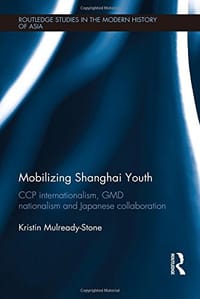
This book explores the similarities and differences among youth organizations that were connected to Chinese political parties or governments in Shanghai, spanning from the beginning of the May Fourth Movement to World War II. These organizations came into being partly as a result of the new status of youth, who emerged as a distinct segment of society, beginning in the late nineteenth century and gained great prominence in the May Fourth Movement. The Communist, Nationalist, and collaborationist contenders for power all recognized the importance of involving youth in their efforts and frequently struggled to define a mission for the youth organizations that could meet with the
agreement of both Party leadership and the youth themselves. Ultimately, the chaotic political and military atmosphere of 1920s-1940s China made it impossible for any contender for power to come up with a lasting, effective means of recruiting and retaining the loyalty of Chinese youth.
The result of exhaustive archival research, this book will be of huge interest to students and scholars of Chinese history, modern history, Communism and the role of youth in revolution.
显示全部
 Globalizing the Soybean
 Pragmatics Online
 China during the Tang-Song Interregnum, 878–978
 Places, Affordances, Atmospheres: A Pathic Aesthetics
 Bombs in the Consulting Room
 Marketing Channel Strategy