
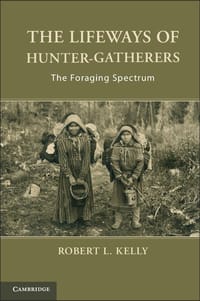
In this book, Robert L. Kelly challenges the preconceptions that hunter-gatherers were Paleolithic relics living in a raw state of nature, instead crafting a position that emphasizes their diversity, and downplays attempts to model the original foraging lifeway or to use foragers to depict human nature stripped to its core. Kelly reviews the anthropological literature for variation among living foragers in terms of diet, mobility, sharing, land tenure, technology, exchange, male–female relations, division of labor, marriage, descent, and political organization. Using the paradigm of human behavioral ecology, he analyzes the diversity in these areas and seeks to explain rather than explain away variability, and argues for an approach to prehistory that uses archaeological data to test theory rather than one that uses ethnographic analogy to reconstruct the past.
- Fully updated second edition, including a new chapter on technology and substantial updates to the material
- A unique source of information on the full range of hunting and gathering lifeways
- Includes a bibliography with over 1000 entries, providing a useful reference for students
Robert L. Kelly is Professor of Anthropology at the University of Wyoming. He has served as department head and as director of the Frison Institute. He is a past president of the Society for American Archaeology and a past secretary of the Archaeology Division of the American Anthropological Association. He has authored more than one hundred articles, books and reviews, includi...
显示全部
 Networks of Faith and Profit
 Parfit's Ethics
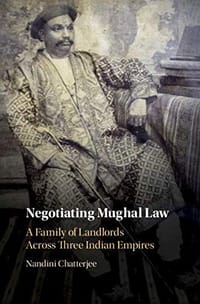 Negotiating Mughal Law
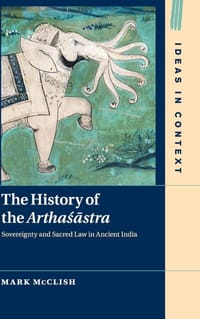 The History of the Arthaśāstra
 A History of the Roman Equestrian Order
 Jurist in Context