
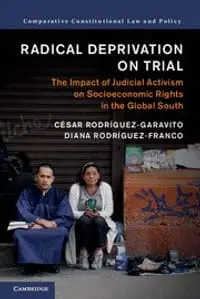
内容简介
This book is an empirical study of contributions by courts in the Global South to comparative constitutionalism. It offers an analytical and comparative framework for understanding these constitutional innovations and illustrates them with a detailed qualitative study of the most ambitious case in constitutional adjudication in Latin America over the last decade: the Colombian Constitutional Court's structural injunction affecting the rights of over 5 million internally displaced people in Colombia, and its implementation process. While the ruling (known as T-025 in Colombia) was handed down in 2004, its monitoring process continues to this day. This book traces the case's evolution over the last ten years from its origin to its effects on law, policy, politics, and public opinion. The far-reaching insights from this case study will be of interest to scholars of comparative constitutionalism as well as leading constitutional courts around the world.
The first in-depth analysis of a landmark case on socioeconomic rights in the Global South
Goes beyond the typical focus on whether courts should enforce 'second-generation' social and cultural rights to consider how to enforce them
Places rulings in socio-legal context by exploring multiple actors outside the court such as public officials, activists, policy makers, and leaders of internally displaced populations
César Rodríguez-Garavito, University of the Andes, Colombia
Cesar Rodríguez-Garavito is an associate professor and founding director of the Program on Global Justice and Human Rights at the University of the Andes, Colombia, and a founding member of the Center for Law, Justice, and Society (Dejusticia). He is the author of numerous articles and co-editor of several books includ...
目录
显示全部
Cambridge University Press的其他书籍查看全部
 《Networks of Faith and Profit》
 《Parfit's Ethics》
 《Negotiating Mughal Law》
 《The History of the Arthaśāstra》
 《A History of the Roman Equestrian Order》
 《Jurist in Context》