
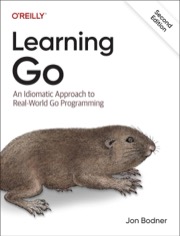
Learning Go, 2nd Edition
出版时间
2024-02-26
ISBN
9781098139292
评分
★★★★★
书籍介绍
这本书最打动人的地方,是它不满足于教会你 Go 的语法,而是试图重塑你的编程直觉。许多从其他语言转来的开发者,会不自觉地用 Java、Python 的思维写 Go,结果写出「不像 Go」的代码——本书正是冲着这个痛点来的,系统讲解资深 Go 开发者默认采用的惯用写法与设计模式,并追问「为什么这样写」。读者反馈中反复被点名的,是 dependency injection 所体现的思维差异,以及 interface 一章对开发背景的依赖。因此它更适合「已会编程、想真正吃透 Go」的人,而非零基础的入门者。第二版在写作质量上明显优于第一版,并补充了 generics 的内容。当然也有读者指出后半部分章节编排略显松散,适合跳读。
作者简介
Jon Bodner has been a software engineer, lead developer and architect for over 20 years. In that time, he has worked on software across many fields, including education, finance, commerce, healthcare, law, government, and internet infrastructure.
Currently, he is a Staff Engineer at Datadog, leading the effort to simplify onboarding for their APM product. Previously, Jon was a Senior Distinguished Engineer at Capital One, working on tech commercialization, open source, testing, the semantic engine that provides payment page detection and population for Capital One's Eno browser extension (www.capitalone.com/applications/eno/virtualnumbers), and improving support for virtual credit card numbers inside of Capital One.
Jon is a frequent speaker at Go conferences, and his blog posts on Go and software engineering have been read by more than 150,000 people. He is the creator of the Proteus data access library (github.com/jonbodner/proteus) and co-developer of checks-out, a fork of the LGTM project (github.com/capitalone/checks-out).
用户评论
我认为目前 go 入门最佳之作 (我有横向对比的). 而且这位作者很认真, 因为我读过这书第一版, 写作比第二版差不少, 证明作者进步了很多.
确实讲的不错,不论是对新手还是对有一定经验的开发者都有帮助。
跳着读完了,最有用的是 dependency injection 的思维。确实跟其他语言挺不一样的。
从第七章(Types, Methods, and Interfaces)开始有点缺乏条理
并发和之前的章节都不错~后面有点乱,就跳着看了
读了将近一半了,个人认为本书不适合完全编程新手学习,interface那一章需要有相当的开发背景才能理解其中的要点,另外本书常常不给出具体的语法规则,而是展示代码示例。但是看得出来作者确实在尽力讲解如何写出很地道的go程序。
正在翻译本书为中文版 https://github.com/chenyz1984/LearningGoV2CN
下载
收藏