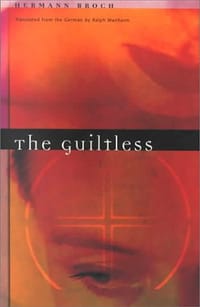
Murder, lust, shame, hypocrisy, and suicide are at the center of The Guiltless, Hermann Broch's novel about the disintegration of European society in the first three decades of the twentieth century. Broch's characters -- an apathetic man who can barely remember his own name (Broch mostly refers to him as A.); a high-school teacher and his lover who return from the brink of a suicide pact to carry on a dishonest relationship; Zerline, the lady's maid who enslaves her mistresses, prostitutes the young country girl Melitta to gentleman A., and metes out her own justice against the "empty wickedness" of her betters -- are trapped in their indifference, prisoners of a sort of "wakeful somnolence". These men and women may mention the "imbecile Hitler", yet they prefer a nap or sexual encounter to any social action. In Broch's mind this kind of ethical perversity and political apathy paved the way for Nazism.Broch believed that writing can purify, and by revealing Germany's underlying guilt he hoped to purge indifference from his own and future generations. In The Guiltless, Broch captures how apathy and ennui -- very human failings -- evolve into something dehumanizing and dangerous.
赫尔曼·布洛赫(Hermann Broch,1886—1951)
奥地利小说家,与卡夫卡、穆齐尔、贡布罗维奇一起被昆德拉誉为“中欧最伟大的四位小说家”。布洛赫生于维也纳,父亲是纺织厂老板,母亲是犹太富商的女儿,他在20岁时接管父亲的纺织厂,后结识卡尔·克劳斯、托马斯·曼、茨威格、罗伯特·穆齐尔、埃利亚斯·卡内蒂、爱因斯坦等人,40岁时进入维也纳大学学习数学、心理学和哲学,45岁时出版首部长篇小说《梦游人》,1938年流亡美国,晚年主要从事群众心理学研究,1950年被提名诺贝尔文学奖,次年心脏病发作,于美国康涅狄格州纽黑文去世。主要代表作有小说《无罪者》《着魔》《梦游人》《维吉尔之死》《未知量》。
译者|李晓艳
译者,德语文学博士,目前就职于山东大学外国语学院德语系。