
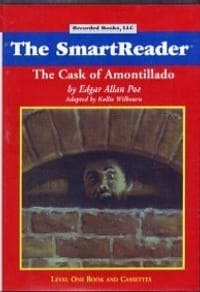
书籍介绍
一个被冒犯了的贵族向另一个贵族复仇,手段是诱其饮下美酒后引入地下墓穴,活体砌墙封死。全书几乎不给动机——Montresor究竟恨Fortunato什么,坡刻意留白,只留下一句"He had hurt me; I must return the favor"。正是这份"无端之仇"制造了本书最刺人的寒意:读者很快发现自己竟在替凶手说话,听他一遍遍温和地"my friend",一边把人往死路上领,一边还替对方挡酒、劝他回去。于是"恐怖"不再来自血腥场面,而来自叙述者的从容与优雅——一个把谋杀讲得像待客之礼的疯子。它篇幅极短、节奏极快,却把"铺垫"做到了极致:酒窖深处越深,砌上的砖越多,读者胸口那阵"墓穴的潮冷"就越真实。适合喜欢心理惊悚、悬疑犯罪,以及想体会"恶如何说得理直气壮"的读者。
作者简介
Edgar Allan Poe (January 19, 1809 – October 7, 1849) was an American writer, poet, editor and literary critic, considered part of the American Romantic Movement. Best known for his tales of mystery and the macabre, Poe was one of the earliest American practitioners of the short story and is considered the inventor of the detective-fiction genre. He is further credited with contributing to the emerging genre of science fiction. He was the first well-known American writer to try to earn a living through writing alone, resulting in a financially difficult life and career.
He was born as Edgar Poe in Boston, Massachusetts; he was orphaned young when his mother died shortly after his father abandoned the family. Poe was taken in by John and Frances Allan, of Richmond, Virginia, but they never formally adopted him. He attended the University of Virginia for one semester but left due to lack of money. After enlisting in the Army and later failing as an officer's cadet at West Point, Poe parted ways with the Allans. Poe's publishing career began humbly, with an anonymous collection of poems, Tamerlane and Other Poems (1827), credited only to "a Bostonian".
Poe switched his focus to prose and spent the next several years working for literary journals and periodicals, becoming known for his own style of literary criticism. His work forced him to move between several cities, including Baltimore, Philadelphia, and New York City. In Baltimore in 1835, he married Virginia Clemm, his 13-year-old cousin. In January 1845, Poe published his poem "The Raven" to instant success. His wife died of tuberculosis two years later. He began planning to produce his own journal, The Penn (later renamed The Stylus), though he died before it could be produced. On October 7, 1849, at age 40, Poe died in Baltimore; the cause of his death is unknown and has been variously attributed to alcohol, brain congestion, cholera, drugs, heart disease, rabies, suicide, tuberculosis, and other agents.
Poe and his works influenced literature in the United States and around the world, as well as in specialized fields, such as cosmology and cryptography. Poe and his work appear throughout popular culture in literature, music, films, and television. A number of his homes are dedicated museums today.
用户评论
大半夜看的怕死人鸟~
又读了一遍~依旧毛骨悚然哈哈
铺垫手法赞一个!
有这么可怕吗?
恕我眼浊这他妈写的神马啊!!!!!!!!脑子里只有一种没看懂的惶恐。我看懂了这个故事,但是无从挖掘作者到底想要表达什么。
超级喜欢的风格
mark
这个确实一般
实在欣赏不来
原谅我很认真地看完看了个寂寞
倒是不觉得砌墙那段有多恐怖,最令人毛骨悚然的还是Montresor最后一句,50年都没人知道这件事。
求书
收藏