
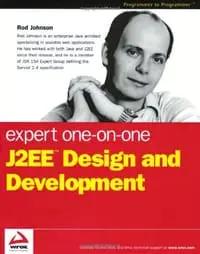
书籍介绍
What is this book about? The results of using J2EE in practice are often disappointing: applications are often slow, unduly complex, and take too long to develop. Rod Johnson believes that the problem lies not in J2EE itself, but in that it is often used badly. Many J2EE publications advocate approaches that, while fine in theory, often fail in reality, or deliver no real business value. "Expert One-on-One: J2EE Design and Development" aims to demystify J2EE development. Using a practical focus, it shows how to use J2EE technologies to reduce, rather than increase, complexity. Rod draws on his experience of designing successful high-volume J2EE applications and salvaging failing projects, as well as intimate knowledge of the J2EE specifications, to offer a real-world, how-to guide on how you too can make J2EE work in practice. It will help you to solve common problems with J2EE and avoid the expensive mistakes often made in J2EE projects. It will guide you through the complexity of the J2EE services and APIs to enable you to build the simplest possible solution, on time and on budget. Rod takes a practical, pragmatic approach, questioning J2EE orthodoxy where it has failed to deliver results in practice and instead suggesting effective, proven approaches. What does this book cover? In this book, you will learn When to use a distributed architecture When and how to use EJB How to develop an efficient data access strategy How to design a clean and maintainable web interface How to design J2EE applications for performance Who is this book for? This book would be of value to most enterprise developers. Although some of the discussion (for example, on performance and scalability) would be most relevant to architects and lead developers, the practical focus would make it useful to anyone with some familiarity with J2EE. Because of the complete design-deployment coverage, a less advanced developer could work through the book along with a more introductory text, and successfully build and understand the sample application. This comprehensive coverage would also be useful to developers in smaller organisations, who might be called upon to fill several normally distinct roles. What is special about this book? Wondering what differentiates this book from others like it in the market? Take a look: It does not just discuss technology, but stress its practical application. The book is driven from the need to solve common tasks, rather than by the elements of J2EE. It discuss risks in J2EE development It takes the reader through the entire design, development and build process of a non-trivial application. This wouldn't be compressed into one or two chapters, like the Java Pet Store, but would be a realistic example comparable to the complexity of applications readers would need to build. At each point in the design, alternative choices would be discussed. This would be important both where there's a real problem with the obvious alternative, and where the obvious alternatives are perhaps equally valid. It emphasizes the use of OO design and design patterns in J2EE, without becoming a theoretical book
AI导读
编辑书评
- 本书的真正价值不在于传授具体的J2EE编码技巧,而在于它是一场关于“架构克制”的思想启蒙。Rod Johnson敏锐地捕捉到了企业软件开发中“过度工程化”的通病,并通过严密的逻辑论证了为何简单的POJO模型比复杂的EJB容器更能适应快速变化的业务需求。相较于同期其他堆砌API的手册,本书更像是一部软件工程哲学的宣言,其提出的依赖注入和面向接口编程理念,直接催生了后来的Spring生态,奠定了现代Java后端开发的基石。
- 然而,本书也存在明显的时代局限性与阅读门槛。随着云原生和微服务架构的兴起,书中针对单体应用或早期分布式场景的具体解决方案已显陈旧,年轻开发者若不加甄别地套用,极易产生误导。此外,糟糕的中文翻译进一步加剧了理解难度。尽管如此,对于希望深入理解架构本质、提升系统设计能力的资深从业者而言,这仍是一本不可绕过的经典。建议在具备一定工程阅历后,带着批判性思维重读,汲取其方法论精髓而非拘泥于技术细节。
核心看点
- 本书核心在于批判当时J2EE开发中普遍存在的过度复杂化倾向,主张通过精简架构而非堆砌技术来交付高价值应用。Rod Johnson基于实战经验指出,许多理论完美的方案在现实中往往导致项目延期或性能低下,因此他提出了一套旨在降低复杂度、提升可维护性的设计哲学,强调技术选择必须服务于业务目标而非盲目遵循规范。
- 作为Spring框架诞生前的奠基之作,本书系统阐述了轻量级容器和依赖注入等关键理念,为后续Spring Framework的兴起提供了理论原型。书中详细探讨了如何通过POJO(普通Java对象)替代沉重的EJB组件,从而简化测试与部署流程。这种对“简单性”的极致追求,不仅解决了当时的痛点,更深刻影响了现代Java企业级开发的架构范式。
- 作者结合大量真实案例,展示了如何从失败项目中 salvaging(挽救)并重构出稳健的高吞吐量应用。书中不仅关注代码层面的实现,更深入到架构决策层面,指导开发者如何在预算和时间约束下做出恰当的技术选型。其提出的“健壮性”标准和对分布式系统非功能性需求的考量,至今仍是评估企业级软件质量的重要维度。
读者共识
- 读者普遍认可该书在Java架构领域的经典地位,认为它是“架构师必读”的启蒙之作。尽管部分读者因翻译问题或内容深度而表示阅读艰难,但一旦突破门槛,便对其开篇即展现的大师级设计理念给予高度评价,认为其对复杂度的剖析极具洞察力,值得反复研读。
- 社区反馈显示,第4章和第11章被多次提及为精华所在,这些章节深入探讨了核心设计原则与实战技巧,具有极高的复用价值。许多读者表示,即便未通读全书,仅精读这几章也能获得显著收益,体现了该书在局部深度上的卓越表现,符合“少即是多”的阅读策略。
- 存在明显的两极分化评价:一方面,资深开发者视其为“一战功成”的神作,肯定其在推动轻量级架构革命中的历史贡献;另一方面,部分潜在读者因畏惧其厚度或翻译障碍而放弃细读,甚至出现“虽未看但知是好”的现象,反映出该书在传播过程中面临的阅读门槛与口碑效应并存的现状。
精彩摘录
- "In this book I aim to help professional J2EE developers and architects make the appropriate choices to deliver high-quality solutions on time and within budget."
用户评论
据说是J2EE开发者必读 下来看看 没细读= =
中文版《J2EE设计开发编程指南》翻译差
在艰难的阅读中。。。开篇就给摆了大师级别的设计理念,点赞!
虽然没看过,也不准备看了,但确实是好书,一战功成!
第4章和11章还是值得反复阅读
Wrox的其他书籍查看全部
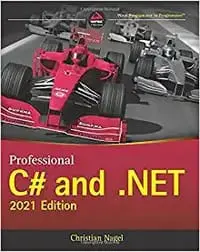 Professional C# and .NET: 2021 Edition
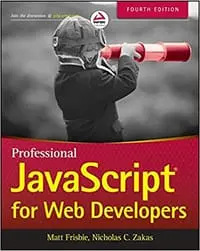 Professional JavaScript for Web Developers, 4th Edition
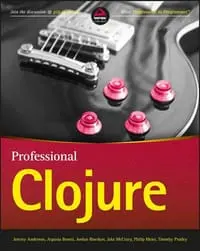 Professional Clojure
 Professional C# 6 and .NET Core 1.0
 Beginning C# 6.0 Programming with Visual Studio 2015
 Professional CodeIgniter