
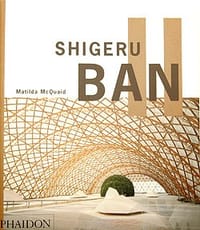
书籍介绍
这并非一本展示建筑大师光辉作品的图录,而是一部关于「建筑可以做什么」的务实答卷。坂茂把纸筒、纸板、竹子和预制木这些被主流眼光轻视的材料,造出了能抵御灾难、庇护灾民的临时居所,也造出了高耸如鸟、沉静如日本庭院的永久建筑。本书最打动专业读者的,是它近乎苛刻的细节诚实:解剖图、材料测试数据、被刻意做精致的铆钉与螺栓节点——这些「容易被忽略」的部分,恰恰构成了他「踏实的天才」的注脚。结构按「纸—木—竹—预制—表皮」五个板块展开,不是为炫技,而是追问一种材料与环境的和谐关系。它适合两类人:一是厌倦了符号化封面、想看清结构如何落地的从业者;二是相信建筑应有温度的普通读者——读完你会重新理解,朴素不等于廉价,克制本身即是一种力量。
作者简介
Matilda McQuaid is Exhibitions Curator and Head of the Textiles Department at the Cooper-Hewitt National Design Museum in New York, and until 2001, was Associate Curator in the Department of Architecture and Design at the Museum of Modern Art, New York. She is the author of numerous essays on architecture, textiles and fibre art in journals and museum publications, including a contribution to Envisioning Architecture: Drawings from the Museum of Modern Art (Museum of Modern Art, 2002), which she also edited.
Frei Otto is an eminent architect based in Germany, who has pioneered research in lightweight membranes and innovative structures. He founded the Development Centre for Lightweight Construction in Berlin in 1957, which later became the Institute for Lightweight Structures in Stuttgart. He collaborated with Shigeru Ban on the Japan Pavilion for Expo 2000 in Hanover, Germany.
用户评论
作为一本MONOGRAPHIE,这本书里提供的资料足够给5星了,不但包括一些解剖图列,甚至还有对材料的测试数据,虽然这一部分并不是很看得懂。 对于坂茂,从大学时代就一直醉心与他的一些设计,那种日本人的细密一丝不苟,又不失大气,更加令人过目难忘。
踏实的天才
利物浦图书馆
非常优秀的一本书了。结构按照“PAPER-WOOD-BAMBOO-PREFABRICATION-SKIN” 5个板块来阐述坂茂2004年前的各个作品。纸筒之外发现了蜂窝板这种建材,inspiring. 纸管的映象太深,导致我一直以为他是一个走硬技术型的建筑师,直到看到“PREFABRICATION”和“SKIN”里的几个空间和表皮的实验。密斯和柯布西耶的精神在他的作品里可以看到,他在努力追求一种流动的,局部流动的,可变的,去除柱子的空间。九宫格房中几近强迫症般的追求空间一体,内外连通,有点密斯。curtain不仅仅只出现在curtain wall house里,也出现在其他案例里,他有试图在追求一种软性的隔离。NAKED HOUSE 中带滚轮的局部空间,带着天真的想象力。
公司里看到的,被节点美到了,竟然可以把那些容易被忽略的铆钉,螺栓做的这么精致美丽,太厉害了。翻完了,人都是贪婪的,总希望别人有什么突破。现在已经很好了。
下载
收藏