
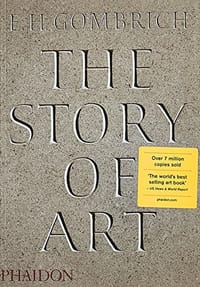
书籍介绍
翻开这本书,你或许会先被那句"实际上根本没有艺术其物,只有艺术家"震住——它一上来就拆掉了普通人心里那堵"艺术太高深"的墙。贡布里希并不急着给你一套评判标准或年代谱系,而是反复追问一个朴素的问题:画家为什么觉得这样画才"合适"?从一块绿色因旁边蓝色太强烈而显得"黄了些",到范·艾克笔下镜子般映照的世界,他把"协调""平衡""合适"这些词,还原成每个人摆花束、配衣服时都经历过的微妙挣扎。正因为它从人的经验出发而非从术语出发,无数自称"0基础"的读者都说它让人"知道站在艺术大门边儿上往哪儿望"。它不教人成为内行,只教人学会观看——这恰是它区别于各类艺术史教材的独特之处。
作者简介
Sir Ernst Hans Josef Gombrich, OM, CBE (30 March 1909 – 3 November 2001) was an Austrian-born art historian who became a naturalized British citizen in 1947.[1] He spent most of his working life in the United Kingdom. He is the author of many works of cultural history and art history, including The Story of Art, a book widely regarded as one of the most accessible introductions to the visual arts.
BiographyThe son of Karl Gombrich and Leonie Hock, Gombrich was born in Vienna, Austria-Hungary, into an assimilated bourgeois family of Jewish origin who were part of a sophisticated social and musical milieu. His father was a lawyer and former classmate of Hugo von Hofmannsthal and his mother was distinguished pianist who graduated from the Vienna Conservatoire with the School's Medal of Distinction. At the Conservatoire she was a pupil of, amongst others, Anton Bruckner. However, rather than follow a career as a concert pianist (which would have been difficult to combine with her family life in this period) she became an assistant of Theodor Leschetizky. She also knew Arnold Schoenberg, Gustav Mahler, Hugo Wolf and Johannes Brahms [3]. Rudolf Serkin was a close family friend. Adolf Busch and members of the Busch Quartet regularly met and played in the family home. Throughout his life Gombrich maintained a deep love and knowledge of classical music. He was a competent cellist and in later life at home in London regularly played the chamber music of Haydn, Mozart, Schubert, Beethoven and others with his wife and elder sister Dea Forsdyke, a concert violinist.
Gombrich was educated at Theresianum Secondary School and at Vienna University before coming to Britain in 1936, where he took up a post as a research assistant at the Warburg Institute, University of London. In 1936, he married Ilse Heller, a pupil of his mother, and herself an accomplished pianist. Their only child, Richard, went on to become a noted Indologist and scholar of Buddhism, acting as the Boden Professor of Sanskrit at Oxford University from 1976 to 2004.
During World War II, Gombrich worked for the BBC World Service, monitoring German radio broadcasts. When in 1945 an upcoming announcement was prefaced by a Bruckner symphony written for Wagner's death, Gombrich guessed correctly that Hitler was dead and promptly broke the news to Churchill. He returned to the Warburg Institute in November 1945, where he became Senior Research Fellow (1946), Lecturer (1948), Reader (1954), and eventually Professor of the History of the Classical Tradition and director of the institute (1959–72). He was elected a Fellow of the British Academy in 1960, made CBE in 1966, knighted in 1972, and appointed a member of the Order of Merit in 1988. He was the recipient of numerous additional honours, including Goethe Prize 1994 and Balzan Prize in 1985 for History of Western Art.
Gombrich was close to a number of Austrian émigrés who fled to the West prior to the Anschluss, among them Karl Popper (to whom he was especially close), Friedrich Hayek and Max Perutz. He was instrumental in bringing to publication Popper's magnum opus The Open Society and Its Enemies. Each had known the other only fleetingly in Vienna, as Gombrich's father served his law apprenticeship with Popper's father. They became lifelong friends in exile.
[edit] WorkGombrich's first book, and the only one he did not write in English, was Eine kurze Weltgeschichte für junge Leser (A short history of the world for young readers), published in Germany in 1936. It was very popular and translated into several languages, but was not available in English until 2005, when a translation of a revised edition was published as A Little History of the World. He did most of this translation and revision himself, and it was completed by his long-time assistant and secretary Caroline Mustill and his granddaughter Leonie Gombrich after his death [4].
The Story of Art, first published in 1950 and currently in its 16th edition, is widely regarded as one of the most accessible introductions to the history of visual arts. Originally intended for adolescent readers, it has sold millions of copies and been translated into more than 30 languages.
Other major publications include Art and Illusion (1960), regarded by critics to be his most influential and far-reaching work, and the essays gathered in Meditations on a Hobby Horse (1963) and The Image and the Eye (1981). Other important books are Aby Warburg: An Intellectual Biography (1970), The Sense of Order (1979) and The Preference for the Primitive (posthumously in 2002). The complete list of his publications, E.H. Gombrich: A Bibliography, was published by Joseph Burney Trapp in 2000.
AI导读
核心看点
- 艺术史是观念演变史,非单纯技术熟练度记录。
- 无抽象艺术实体,唯有追求诚实与平衡的艺术家。
- 融合四百年畅销口碑与四百幅精美插图,通俗易懂。
读者共识
- 公认的艺术史入门圣经,四十年长销不衰的经典之作。
- 文字娓娓道来,兼具学术深度与人文关怀,极具感染力。
- 印刷精美插图丰富,虽厚重但值得收藏并反复翻阅。
精彩摘录
- "实际上根本没有艺术其物。只有艺术家,他们是男男女女,具有绝佳的天资,善于平衡形状和色彩以达到“合适”的效果;更难得的是,他们是具有正直性格的人,绝不肯在半途止步,时刻准备放弃所有省事的效果,放弃所有表面上的成功,去经历诚实的工作中的辛劳和痛苦。"
- "一个人为鲜花、为衣服或者为食物这样费心推敲,我们会说他琐碎不堪,因为我们可能会觉得那些事情不值得这么操心,但是,有些在日常生活中也许是坏习惯而常常遭到压制或掩盖的事情,在艺术世界里却恢复了应有的地位。在事关协调形状或者调配颜色时,艺术家要永远极端地“琐碎”,或者更恰当地说,要极端地挑剔。他有可能看出我们简直无法察觉的色调和质地的差异。而且,他的工作要比我们日常生活体验的事情要远为复杂。他所要平衡的绝不止两三种颜色、外形或味道。他的画布上大概有几百种色调和形状必须加以平衡,直到看起来“合适”为止。一块绿色可能突然显得黄了一些,因为他离一块强烈的蓝色太近——他可能觉得一切都被破坏了,画面上出现了一"
- "几何形式的规整和对自然的犀利观察,将二者结合起来乃是一切埃及艺术的特点。当时最紧要的不是好看不好看,而是完整不完整。艺术家的任务是要尽可能清楚、尽可能持久地把一切事物都保留下来。无论哪一个事物,他们都得从它最具有特性的角度去表现。艺术家在画中所体现的不只是他对形式和外貌的知识,还有他对那些东西的意义的知识。"
- "但是,我们圈外人通常为之焦虑的那些观念,即美和表现的观念,艺术家却很少谈起。当然情况也不是一直如此,但是过去已有好多世纪是这样,现在也还是这样。部分原因在于:艺术家往往腼腆怕羞,说“美”这类大话觉得不好意思。如果谈到“表现他们的感情”,以及使用类似的讲法,就会觉得自命不凡。他们把这些看作理所当然的东西,而且已经看出讨论起来没有益处。这是一个因素,似乎还是一个重要的因素,然而还有另一个因素。据我看,在艺术家日常为之发愁的事情当中,那些观念远远不像圈外人猜想的这么举足轻重。艺术家设计画面、画速写或者考虑他的画是否已经完工时,困扰他的事情难以用语言表达。他也许要说他发愁的是画得“合适”(right)"
- "我们已经看到在哥特人的入侵跟我们现在所称的哥特式艺术的兴起之间大约隔着700年的时间。我们也知道在黑暗时期的冲击和混乱之后艺术逐渐地在复兴,而且在哥特式时期,那种复兴就开始发展到鼎盛阶段。"
- "布鲁内莱斯基那一派的佛罗伦萨的艺术名家已经发展成功一种方法,把自然表现在画面中几乎具有科学的精确性。他们先从直线透视的框架入手,运用它们的解剖知识和短缩法则去构成人体。凡.艾克走的是相对的路线,他耐心地在细节上再增添细节,知道整个画面变得像是镜子般的反应可见世界为止,使人感到真实。北方艺术和意大利艺术之间的这种重大区别一直保持了很多年。"
- "恐怕正是因为这个缘故,中国的宗教艺术才较少用来叙述关于佛教和中国贤哲的传说,较少宣讲某种具体的教义一跟中世纪使用的基督教艺术不同一一而是用艺术去辅助参悟。"
- "我们不易再去体会那种心情,因为我们是浮躁的西方人,对那种参悟的功夫缺乏耐心和了解。我想我们在这方面的欠缺之甚绝不亚于中国古人在体育训练技术方面的欠缺。"
用户评论
讀了快一年了,最近買了新版本,每天翻幾頁,都是很漲姿勢的~
陆陆续续花了三个月,全部读完时只能说知道站在艺术大门边儿上往哪儿望了。
力荐英文版。作者将事件(event)编织成故事(story)的功力非常厉害。论述复杂历史过程的用语谨慎恰当。选图用心,前后文的图片往往能建立有趣的参照关系。英文版的印刷大致没有色差,能显示细节。
读了好久。。。建议和范景中老师的笺注一起读,也可以了解一些贡氏的八卦,比如发表的第一篇论文就是关于中国古诗的,曾经以《玉娇梨》为底本写了戏剧,妈妈是马勒妹妹的钢琴老师云云。。。
新玩具。/ 电子书哇。。累死老子了。。不知道 @和尚不 的书单处理得怎么样了。。
2022: 从图书馆借来读了,前几章还不错,最后到了modern art的时候又开始神叨叨起来,不是很懂。 2012: 配合文艺复兴艺术课
书名是艺术的故事,其实主要讲的还是欧洲艺术史。当作梳理脉络来看的书还是挺好的,排版跟阅读体验也不错。很喜欢作者对每个时代/地域的描述不会作过度普遍化的概括。读完之后对中世纪的绘画也消除了那么一点点偏见。整本书提到的作品和艺术家实在是太多了,老是边看边忘,如果不是作者经常把不同时代的作品来回作对比逼着我经常往回翻,恐怕忘得更多。在多读多看多游的路上还有很远要走呀。
“I still remain convinced”, Gombrich said, “that we can recognize mastery in art and this recognition has little to do with our personal likes and dislikes.” I share his conviction. “There really is no such thing as Art. There are only artists.” 这是他们的故事。Jan van Eyck, Leonardo da Vinci, Caravaggio, Nicolas Poussin, Rembrandt van Rijn, William Turner
啥也不说了,永恒的经典!当年不知道受啥刺激居然读的英文版,全程查字典,但是读完后感觉打通了任督二脉!
终于读完了,可以寄回家了。作为艺术史入门读物是最好的,很系统,又不断滴在过程中回顾比较。

下载
收藏