
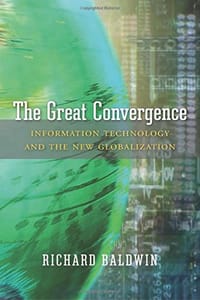
The Great Convergence
出版时间
2016-11-14
ISBN
9780674660489
评分
★★★★★
书籍介绍
这本书最独特之处,在于把两百年、跨度极大的全球化史,压缩进一个极简的模型里:全球化就是不断「解绑」的过程。最初,运输成本高到让人只能与土地捆绑,生产被迫贴着消费;蒸汽机降低了运货成本,商品得以全球流动,这是第一次解绑;信息技术降低了传播成本,观念与工序可以跨国拆分,这是第二次解绑;而未来的关键,是劳动力能否像商品和观念一样跨越边界。作者用「成本下降」这一条主线贯穿三次浪潮,逻辑干净到近乎废话,却也锋利到足以重新解释贫富国家的兴衰。它适合那些不满足于「全球化是好是坏」这类口号、想看清背后机制的读者;但如果你期待政策建议或最新案例,可能会失望——它更像一把分析工具,而非预言。
作者简介
Richard Baldwin is Professor of International Economics at the Graduate Institute, Geneva, and President of the Centre for Economic Policy Research (CEPR), London.
精彩摘录
- "在出海靠风,出行靠马的年代,商品只能在极短的距离内运输,运输的体量也极小,很难从中获利。人类由此与土地被捆绑在了一起,生产成为消费的“约束条件”。换句话说,生产被强制与消费捆绑在了一起。全球化可以被看作是这种捆绑的“解绑”过程。"
目录
Introduction
I. The Long History of Globalization in Short
1. Humanizing the Globe and the First Bundling
2. Steam and Globalization’s First Unbundling
3. ICT and Globalization’s Second Unbundling
显示全部
用户评论
对全球化和工业化的阐释和解读非常精到,对目前主流发展理论的批判很让人信服
可以50页写完. Economist’s English.
@2020-05-23 12:26:21
基本上整本书都在解释bundle和unbundle的模型。感觉有些冗长了,不需要这么多页
Baldwin老师的书 🆙!听老师上课真的是享受😆
看了1-3和10,感觉有点神棍的意思,全球化的三个阶段(the cost of moving goods-ideas-people依次下降),交通的发展促进了商品的流动(goods),ICT技术促进了观念的流动(ideas),同时未来的ICT技术的进一步发展实现了劳动力的虚拟离岸作业(people),但是很奇怪的是,未来发达国家可以将低端劳动外包给离岸的发展中国家的工人,这些工人在本国操作遥控即可实现现如今肉体在场才可能实现的服务,但是这种畅想有没有考虑到信息安全的问题(以及高度自动化的可能),除此之外,IC和IT的作用是不同的,IC促进了信息的流动,更好辅助fractionalization,但是IT技术的自动化和程序化实际上实现了生产线全包,其实降低了fractionalization
A bit outdated given Covid and the war
Before 2020, nobody was foreseeing a global pandemic. After 2020, nobody would doubt the third unbundling, which was a speculative conclusion mentioned in this book, is happening in most countries. Hence, this is a well-written book for reminding us of what happened in the past that led to today's world situation and getting ready for the future.

求书
收藏