
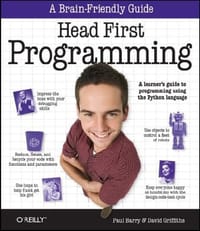
书籍介绍
这本书最特别之处,在于它把“编程思维”和“Python语法”拆开来讲。它不急着让你记住Python的语法细节,而是先用一个猜数字小游戏、一个Starbuzz点单系统,让你体会变量、条件分支、循环、函数这些跨语言通用的核心概念——换任何一门语言都能用。这种“先懂原理、再学语法”的安排,正是它区别于厚达上千页的官方教程的地方。读者反馈两极分化:零基础者觉得“像小人书一样轻松”,有一定经验的人则认为“讲得偏浅、有些地方一笔带过”。它适合真正从零起步、需要被“逗”着读下去的人;若你已会其他语言、只想速查Python语法,可能会觉得不够解渴。
AI导读
核心看点
- 本书严格遵循Head First系列风格,通过大量视觉化图表、幽默对话和交互式练习,降低编程认知门槛。它不追求语法大全,而是聚焦于变量、条件判断、循环、函数及对象等通用编程核心概念,帮助读者建立正确的计算思维逻辑,而非死记硬背Python语法细节。
- 内容涵盖Python 3基础语法及Tkinter、Pygame等图形界面与游戏开发库的入门应用。书中通过制作猜数字游戏、DJ混音器等具体项目,演示如何将抽象概念转化为可运行的代码。但需注意,其技术深度有限,仅适合了解基础架构,无法深入探讨高级特性或复杂算法实现。
- 强调编程工具链的正确使用,如IDLE编辑器的功能、代码保存与执行原理、路径与分支逻辑的构建。书中明确指出代码是文本,计算机无法直接处理人类语言,需通过解释器转换。这种对底层机制的通俗解释,有助于初学者理解软件运行的基本原理,避免陷入盲目复制代码的误区。
读者共识
- 读者普遍认为本书风格独特,幽默且视觉化强,对完全零基础者友好,能有效降低学习焦虑。但多数有编程经验或希望系统学习Python的读者认为其内容过于浅显,技术深度不足,甚至认为其解释存在误导或错误,不建议作为主要学习资源,仅适合娱乐性浏览或激发兴趣。
- 大量评论指出书中代码示例存在环境问题,如依赖被墙网站、库版本不兼容等,导致实际动手环节受阻。部分读者反映书中对关键概念的解释含糊不清,甚至不如传统教材严谨。因此,不建议将其作为唯一学习途径,必须配合其他正规教程使用,否则极易产生挫败感或错误理解。
- 共识认为本书不适合追求高效、系统掌握Python技能的读者。其‘糙快猛’的风格虽有趣,但信息密度低,且部分技术内容已过时。对于希望快速就业或深入理解计算机原理的读者,本书价值极低。仅推荐给那些对编程完全陌生、需要心理建设、且能容忍其技术缺陷的纯新手作为入门尝试。
精彩摘录
- "print('Welcome!') g = input('Guess the number: ') guess = int(g) if guess == 5: print('You win!') else: print('You lose!') print('Game over!')"
- "The editor saves the code you write into a file on your hard disk.The code(sometimes called the source code) is just text, and it can be written and read by humans.But computers can't process text meant for humans, at least not very well.That's why we need a tool to translate the human-friendly sour"
- "Fortunately,Python3 comes with a built-in application called IDLE,which does both jobs and more.IDLE enables you to write and edit Python code,it translates this code into binary form, and finally, it runs the Python3 program.Because of this,IDLE is known as an Integrated Development Environment."
- "A path refers to the set of instructions that the computer will actually follow(or excute). Your code is like a street network, with lots of sections of code connected together just like the streets in a city.When you drive through a city, you make decisions as to which streets you drive down by tur"
- "Your program makes a decision using a branch condition.A branch condition has the value true or false.If the branch condition is true,it runs the code on the branch.And if the branch condition is false,it runs the code on the false branch."
- "Python uses indents to connect a sequence of commands together to form paths.So how you connect branches together?You simply indent the second branch in by one more level.(Intends matter in python.Be careful how you indent code in Python;if you don't indent your code correctly,your code might do som"
- "Loops are a little like branches.Just like branches, loops have a condition(the loop condition)that is either true or false.Also,like the if part of branches,if the loop condition is true, then a loop will run a given piece of code.For a branch,this code is called the body.For a loop,it's called the"
- "from random import randint secret=randint(1,10) print('Welcome!') guess=0 while guess!=secret: g=input('Guess the number:') guess=int(g) if guess==secret: print('You win!') else: if guess >secret: print('Too high!') else: print('Too low!') print('Game over!')"
用户评论
想通过这本书来入门python,看完实在不尽人意。本书面向的应该是没有编程知识的初学者,但我相信一定会有不少迷惑的地方,不少应该详细解释的地方一笔带过,即使理解清楚又会花费不必要的时间(不是什么问题都需要去花费时间去理解的)。对于有编程经验的读者来说,该详细解释的基本特性只是略过,全篇笔墨着重在tkinter及pygame的应用和实现,对大多数人来说这两者都没那么重要(即使主力做GUI也不会使用tkinter,简陋的想哭,pygame更不用说),在写这些之前看了两章 head first python,比这本好太多,唯一缺点是的确需要一点点的语言基础。
英文不太好 看了两天多一点 尽管内容不怎么丰富 但是写的实在太逗了 对于我这样的编程苦手来说 了解一些大架构上的东西和简单的应用 更重要的是激起了读那本一千多页的第四版的兴趣 这可能也是作者的目的吧
GUI 挺不错的
来学习通俗化的比喻,「马路」、「小火车」… 可惜只有几个章节做得还不错。
太初级。
发现了一种高级编程书的阅读模式。材料准备:旧书网买二手中文版,大概比一手要便宜一半(含运费);网络去免费下载英文版pdf,推荐PDFDrive(不需挂外网好像)。读书过程:先读中文版,提高速度,站在译者的肩膀上,读不懂的地方,翻英文原版,尤其是有新的专业名词诞生时。最棒的是因为有pdf,复制书中代码方便多了,手写部分少得可怜!(当然,复制过来代码的空格位置需要重修调整,调整成Python可识别)阅读完待解决的问题:自己做好了整本书涉及到的代码文件夹,那么如何对有源代码需求的读者开放,放在Github上吗?希望没有人已经做了此事,那么我会因为网络咨询不发达导致白费功夫。Oh,可恶的互联网长城!不过倒是提醒我,是该想法子搞懂Github的使用方式了,前几年就注册过,不懂怎么储存,也不会检索。
有两点值得推荐,其一是非常适合编程零基础的新人了解编程,其二是选择了Python这个简单而强大的语言,而不是C或者PHP,JS之类的语言。但是正因为如此,这本书只适合零基础新人,不适合有一定经验的人的看。
用python来介绍编程的基本概念与思路,讲了大多数语言都会涉及到的概念,简单易懂。看了前七章,感觉是一本对新手很友好的入门书籍。
这套书原版竟然是彩色的

O'Reilly Media的其他书籍查看全部
 Developing Apps with GPT-4 and ChatGPT
 Building Knowledge Graphs
 Essential Math for AI
 Running Lean (3/e)
 Quarkus Cookbook
 Learning React 2nd ed.
求书
收藏