
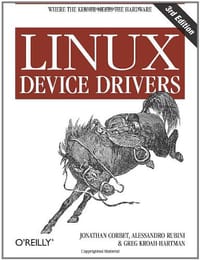
Device drivers literally drive everything you're interested in--disks, monitors, keyboards, modems--everything outside the computer chip and memory. And writing device drivers is one of the few areas of programming for the Linux operating system that calls for unique, Linux-specific knowledge. For years now, programmers have relied on the classic Linux Device Drivers from O'Reilly to master this critical subject. Now in its third edition, this bestselling guide provides all the information you'll need to write drivers for a wide range of devices. Over the years the book has helped countless programmers learn: * how to support computer peripherals under the Linux operating system * how to develop and write software for new hardware under Linux * the basics of Linux operation even if they are not expecting to write a driver The new edition of Linux Device Drivers is better than ever. The book covers all the significant changes to Version 2.6 of the Linux kernel, which simplifies many activities, and contains subtle new features that can make a driver both more efficient and more flexible. Readers will find new chapters on important types of drivers not covered previously, such as consoles, USB drivers, and more. Best of all, you don't have to be a kernel hacker to understand and enjoy this book. All you need is an understanding of the C programming language and some background in Unix system calls. And for maximum ease-of-use, the book uses full-featured examples that you can compile and run without special hardware. Today Linux holds fast as the most rapidly growing segment of the computer market and continues to win over enthusiastic adherents in many application areas. With this increasing support, Linux is now absolutely mainstream, and viewed as a solid platform for embedded systems. If you're writing device drivers, you'll want this book. In fact, you'll wonder how drivers are ever written without it.
- 本书是Linux设备驱动开发的权威指南,由内核社区核心维护者撰写,深入讲解字符设备、块设备、网络设备等驱动模型。内容涵盖内核模块加载机制、内存管理、中断处理、I/O映射等核心子系统,帮助读者理解Linux内核架构与硬件交互原理,是学习内核编程的必读经典。
- 书中提供大量实际开发经验与API使用规范,详细解析kmalloc内存分配策略、GFP标志位含义、gendisk结构体初始化等关键实现细节。强调驱动开发中的安全性、稳定性要求,指导开发者避免常见陷阱,如睡眠上下文错误、资源竞争等问题,提升代码健壮性。
- 尽管基于旧版内核编写,但书中关于驱动框架设计思想、内核接口规范、模块开发流程等内容仍具极高参考价值。读者可结合GitHub上社区维护的适配代码,在最新Linux内核环境中实践验证,实现从理论到工程落地的完整学习闭环,适合进阶开发者系统提升。
- 具备C语言基础与Linux系统使用经验,希望深入理解操作系统内核机制、学习设备驱动开发原理的计算机专业学生或研究人员。本书可作为高校操作系统课程的高级参考书,帮助读者建立对内核子系统交互关系的整体认知,为后续深入研究奠定基础。
- 从事嵌入式Linux开发、物联网设备固件编写、硬件适配工作的工程师。书中关于PCI资源分配、USB热插拔、中断处理等章节内容,可直接应用于实际项目中的驱动调试与优化,解决硬件兼容性问题,提升系统稳定性与性能表现。
- 对Linux内核源码感兴趣、希望参与开源社区贡献的开发者。本书由内核维护者亲自编写,内容贴近真实开发场景,有助于读者理解内核代码规范、提交补丁流程、社区协作机制,为成为合格的内核贡献者提供必要知识储备与道德指引。
- 本书代码示例基于Linux 2.6内核,无法直接在现代内核中编译运行。建议读者访问GitHub上社区维护的适配仓库,获取支持3.x及以上内核的修正代码。切勿盲目照搬书中代码,需结合当前内核文档与API变更进行二次验证,避免引入安全漏洞或系统崩溃风险。
- 书中部分内容冗长且缺乏循序渐进引导,初学者易因概念密集而放弃。建议配合《深入理解Linux内核》《Linux内核设计与实现》等书籍交叉阅读,先建立系统级知识框架,再针对性查阅本书相关章节。切勿通读全书,应聚焦自身项目需求片段式学习。
- 中文版翻译质量参差不齐,部分术语表述晦涩难懂,严重影响阅读体验。强烈建议直接阅读英文原版,或对照英文原文理解关键段落。书中涉及大量内核内部数据结构与调用链,中文译本易产生歧义,可能导致错误理解,务必以官方文档和源码为准进行核实。
- 本书被广泛认为是Linux驱动开发领域的经典之作,内容全面覆盖驱动开发所需的核心知识点,具有不可替代的参考价值。尽管存在代码过时、翻译不佳等问题,但其对内核机制的深入剖析仍获业界高度认可,是驱动工程师案头必备的工具书,适合长期查阅与片段式学习。
- 读者普遍反映本书不适合零基础入门,缺乏对基础概念的铺垫,学习曲线陡峭。许多初学者因无法理解上下文而中途放弃。建议仅作为进阶参考,配合官方文档、在线教程及实际项目实践使用。切勿将其作为唯一学习资源,需结合其他材料构建完整知识体系。
- 书中关于驱动模型、内存映射、中断处理等章节评价较高,被认为讲解清晰、实用性强。但部分章节被认为冗长无趣、示例代码命名不规范、设计思想解释生硬。读者应摒弃通读幻想,聚焦具体技术点查阅,利用其作为API规范与最佳实践的权威依据,避免陷入无效阅读。
本导读基于书籍简介、目录、原文摘录、短评和书评生成,不等同于全文精读。
- "GFP_ATOMIC Used to allocate memory from interrupt handlers and other code outside of a process context. Never sleeps. GFP_KERNEL Normal allocation of kernel memory. May sleep."
- "struct gendisk is a dynamically allocated structure that requires special kernel manipulation to be initialized; drivers cannot allocate the structure on their own. Instead, you must call:"
- "The minors argument should be the number of minor numbers this disk uses; note that you cannot change the minors field later and expect things to work properly. When a disk is no longer needed, it should be freed with:"
- "A gendisk is a reference-counted structure (it contains a kobject). There are get_disk and put_disk functions available to manipulate the reference count, but drivers should never need to do that. Normally, the call to del_gendisk removes the final reference to a gendisk, but there are no guarantees"
- "But this book is also about how the Linux kernel works and how to adapt its workings to your needs or interests."
- "My hope is that this edition helps to bring that fun and opportunity to a new set of Linux developers. Whether your interests are in the kernel or in user space, I hope you find this book to be a useful and interesting guide to just how the kernel works with the hardware."
- "I am honored that I’ve had the ability to contribute to this book. I hope that it enables others to learn the details about the kernel, discover that driver development is not a scary or forbidding place, and possibly encourage others to join in and help in the collective effort of making this opera"
- "We hope this book is useful as a starting point for people who want to become kernel hackers but don’t know where to start."
 Linux Device Drivers Development
 Linux Kernel Programming Part 2 - Char Device Drivers and Kernel Synchronization: Create user-kernel interfaces, work with peripheral I/O, and handle hardware interrupts
 Developing Apps with GPT-4 and ChatGPT
 Building Knowledge Graphs
 Essential Math for AI
 Running Lean (3/e)
 Quarkus Cookbook
 Learning React 2nd ed.