
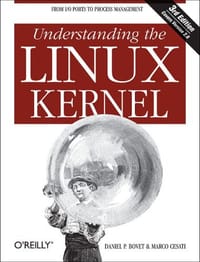
In order to thoroughly understand what makes Linux tick and why it works so well on a wide variety of systems, you need to delve deep into the heart of the kernel. The kernel handles all interactions between the CPU and the external world, and determines which programs will share processor time, in what order. It manages limited memory so well that hundreds of processes can share the system efficiently, and expertly organizes data transfers so that the CPU isn't kept waiting any longer than necessary for the relatively slow disks. The third edition of Understanding the Linux Kernel takes you on a guided tour of the most significant data structures, algorithms, and programming tricks used in the kernel. Probing beyond superficial features, the authors offer valuable insights to people who want to know how things really work inside their machine. Important Intel-specific features are discussed. Relevant segments of code are dissected line by line. But the book covers more than just the functioning of the code; it explains the theoretical underpinnings of why Linux does things the way it does. This edition of the book covers Version 2.6 , which has seen significant changes to nearly every kernel subsystem, particularly in the areas of memory management and block devices. The book focuses on the following topics: * Memory management, including file buffering, process swapping, and Direct memory Access (DMA) * The Virtual Filesystem layer and the Second and Third Extended Filesystems * Process creation and scheduling * Signals, interrupts, and the essential interfaces to device drivers * Timing * Synchronization within the kernel * Interprocess Communication (IPC) * Program execution Understanding the Linux Kernel will acquaint you with all the inner workings of Linux, but it's more than just an academic exercise. You'll learn what conditions bring out Linux's best performance, and you'll see how it meets the challenge of providing good system response during process scheduling, file access, and memory management in a wide variety of environments. This book will help you make the most of your Linux system.
博韦,计算机科学专业博士,意大利罗马大学Tor vergata分校全职教授。
切萨蒂 数学和计算机科学博士,罗马大学Tor vergata分校工程学院计算机科学系助理研究员。
- 本书深入剖析Linux 2.6.11内核源码,系统讲解中断处理、进程调度、内存管理等核心机制。通过解析runqueue、irq_desc_t等关键数据结构,揭示内核如何高效管理CPU时间片与物理内存,帮助读者理解操作系统底层运作原理。
- 内容涵盖从用户态到内核态的上下文切换、系统调用实现、信号处理及同步原语。书中详细解释TLB刷新、页表切换及线程局部存储等硬件交互细节,为读者提供构建稳定内核模块所需的底层技术支撑与理论依据。
- 作为经典内核教材,本书强调宏观架构与微观实现的结合。虽然基于旧版内核,但其阐述的操作系统设计思想、内存保护机制及并发控制策略依然具有极高的参考价值,是理解现代Linux内核演进脉络的重要基石。
- 适合具备C语言基础、熟悉计算机组成原理及操作系统概念,并希望深入钻研Linux内核源码的开发者。读者需有耐心阅读复杂的技术细节,且必须结合官方内核源码同步学习,否则难以理解书中对代码逻辑的深入剖析。
- 适合从事Linux驱动开发、系统编程或内核模块编写的工程师。本书提供的中断向量分配、临界区保护、定时器实现等具体实现细节,对于解决底层开发中的并发安全、内存泄漏及性能优化问题具有直接指导意义。
- 不适合Linux初学者或仅关注应用层开发的读者。若缺乏操作系统原理基础,阅读本书将极其困难。建议先阅读《现代操作系统》等理论书籍建立概念框架,再以此书为工具书查阅具体实现,避免陷入晦涩的代码细节而迷失方向。
- 强烈建议阅读英文原版或高质量译本,并配合Linux 2.6.11源码同步阅读。中文译本存在术语翻译不统一、人名错误及语句不通顺等问题,严重影响阅读体验。切勿依赖二手解读,必须亲自对照源码验证书中描述的数据结构。
- 不要试图一次性通读全书,本书内容极其艰深,需反复研读。建议先掌握操作系统基本概念,再针对特定模块(如内存管理或进程调度)进行专项突破。阅读过程中需保持耐心,接受长时间的技术攻坚,切勿因晦涩而放弃。
- 注意本书基于2.6.11内核,与现代Linux内核存在差异。读者应关注其设计思想与架构原则,而非死记硬背具体API或数据结构。对于现代内核特性,需另行查阅最新文档。本书价值在于培养阅读内核源码的能力,而非提供即时可用的开发指南。
- 读者普遍认为本书是理解Linux内核机制的必读经典,尽管版本较老,但其对操作系统底层原理的阐述依然深刻且准确。许多读者表示,即使多年后重读,仍能发现新的收获,其技术价值经得起时间考验,是构建扎实系统编程基础的关键读物。
- 多数读者反馈阅读过程极其痛苦,耗时漫长且难度极大。书中内容晦涩难懂,对读者基础要求极高。部分读者因翻译质量差或内容过于陈旧而中途放弃,但也有读者坚持读完后感叹其通透性,认为之前的弯路都是因为没读此书。
- 读者一致强调必须结合源码阅读,单独阅读本书效果极差。书中对代码逻辑的引用需读者自行在源码中查找验证,否则无法真正理解。同时,读者警告不要依赖低质量译本,强烈建议寻找英文资源或官方源码辅助学习,以确保技术理解的准确性。
本导读基于书籍简介、目录、原文摘录、短评和书评生成,不等同于全文精读。
- "中断(interrupt)通常被定义为一个事件,该事件改变处理器执行的指令顺序。"
- "物理IRQ可以分配给32~238范围内的任何向量。"
- "每个中断向量都有它自己的irq_desc_t描述符。"
- "临界区是一段代码,在其他的内核控制路径能够进入临界区前,进入临界区的的内核控制路径必须全部执行完这段代码。"
- "每个定时器都包含一个字段,表示定时器将需要多长时间到期。每个字段的初值就是jiffies的当前值加上合适的节拍数。"
- "Linux的调度基于分时(time sharing)技术:多个进程以“时间多路复用”方式运行,因为CPU的时间被分成“片(slice)”,给每个可运行进程分配一片。"
- "数据结构runqueue是Linux2.6调度程序最重要的数据结构。系统中的每个CPU都有它自己的运行队列,所有的runqueue结构存放在runqueue每CPU变量中。"
- "当用户态进程请求动态内存时,并没有获得请求的页框,而仅仅获得对一个新的线性地址区域的使用权,而这一线性地址区间就成为进程地址空间的一部分。这一区间叫做“线性区”"
 Developing Apps with GPT-4 and ChatGPT
 Building Knowledge Graphs
 Essential Math for AI
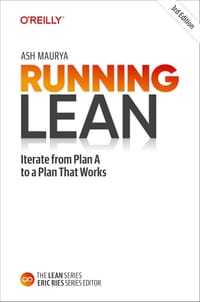 Running Lean (3/e)
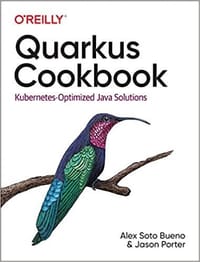 Quarkus Cookbook
 Learning React 2nd ed.