
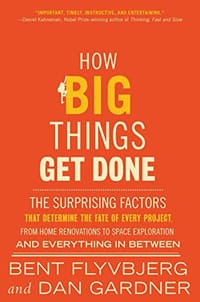
书籍介绍
这本书最尖锐的判断,是戳破'规模越大越需要谨慎'的常识:大型项目频频超支延期的根源不在技术,而在'承诺谬误'——人们为了拿到批准,故意报低预算与工期。它由此提出一套反直觉的成事方法:与其拥抱创新与冒险,不如刻意使用成熟技术、借用有经验者的历史数据;与其从技术出发倒推,不如从客户体验'从右到左'地规划。读者印象最深的,是它承认'隐藏之手'的价值——适度的乐观甚至无知,反而是推动人出发的动力。它适合那些受够了宏大叙事、想为'为何多数大事会失败'找到系统答案的人,而非寻找成功学模板者。
作者简介
Bent Flyvbjerg is a professor at Oxford University, an economist, and "the world’s leading megaproject expert,” according to global accounting network KPMG. He has consulted on over one hundred projects costing $1 billion or more and has been knighted by the Queen of Denmark. Dan Gardner is a journalist and the New York Times bestselling author of Risk, Future Babble, and Superforecasting (with Philip E. Tetlock).
AI导读
核心看点
- 揭示92%大项目超支延期的真相
- 提出慢思考快行动与模块化策略
- 从右向左逆向规划确保目标清晰
读者共识
- 道理浅显但极具实操指导意义
- 模块化与逆向思维是破局关键
- 强调经验与成熟技术优于盲目创新
精彩摘录
- "两个阶段通常分别称为开发阶段和制作阶段;在建筑业中,则分别称为设计阶段和建造阶段。不过,基本理念对任何行业来说都是一样的:先思考,再行动。 任何一个项目都开始于一个愿景,而愿景在最开始时充其量只是项目将会变成的辉煌而模糊的形象。所谓计划,就是对愿景进行充分的研究、分析、测试和细化,这样我们就可以确信自己已经拥有了一个可靠的、能够指引我们前行的路线图。 大多数项目的计划工作都是通过计算机、纸张和物理模型完成的,而这也就意味着计划阶段相对来说更便宜且更安全。如果不存在时间压力,那么计划阶段推进得慢一点是一件好事。建设阶段则是另一回事,因为在项目建设阶段,大量资金已经花出去了之后,就是项目容易受到影"
- "Developing a clear, informed understanding of what the goal is and why -- and never losing sight of it from beginning to end -- is the foundation of a successful project."
- "You've got to start with the customer experience and work backwards to the technology. You can't start with the technology and try to figure out how you are going to sell it."
- ""Work backwards" also fails when planners aren't compelled to nail down what's in that final flowchart box on the right and forced to think from right to left. Without that, it's easy to get consumed by the blizzard of details and difficulties that arise during the planning of any project, while the"
- "Planning is doing: Try something, see if it works, and try something else in light of what you've learned."
- "When we experience delays and cost overruns, we naturally go looking for things that are slowing the project down and driving up costs. But those delays and overruns are measured against benchmarks. Are the benchmark reasonable?"
- "The whole philosophy was to share the culture right from the top to the person sweeping the dust off the runway or finishing off the concrete or putting the tiles on the floor. They had to feel equally part of what we are building."
- "成功的项目都是相似的,失败的项目也都是相似的 本书作者傅以斌以前在丹麦领导过大项目,而且很成功。他有感于很多项目做不成,就建了一个大型交通工程项目数据库,发现从 1910 年到1988 年之间,世界范围内各种工程项目的最初预算比最终成本平均要低28%,而且 10 个项目中有 9 个会超预算。 他把结果发表出来,麦肯锡咨询公司就联系他,说咱们能不能一起研究一下 IT 项目的超预算情况。傅以斌原本以为 IT 项目比较省钱,哪知道超预算情况更严重。于是他索性玩了个大的:把各个领域的项目都囊括进来,什么国防、核能、航天、采矿、汽油、奥运会等都算在内,他的数据库涵盖了 20 多个领域、136 个国家的 "
用户评论
大型工程,差不多很多都是政府工程,基本上都会超过预算、延期交付。但是看看每年如期而至的iPhone们,商业社会早就知道怎么做项目了,只是在政府工程里面,没有人关心这个。。。再也一次证明了市场的高效
做了多年项目经理,常有沦为开会协调员的时候,很多事不由自己控制。看完这本书后觉得大道至简,把事做好并不复杂,think slow and act fast
公司ceo推荐manager们读的书。
书中主要分析了big projects为何会严重delay,over cost,并且得不到预期的benefit,然后提出了一套理论和方法去解决。
本书的一大特点是有很多案例,并且理论很成体系。
总得来说,是一本值得一读的书。
万维刚精英日课5解读
这本书对我们专栏是个很好的借鉴,因为我们一贯推崇的价值观是求新、求变,主张做事要有冒险精神。傅以斌说做大项目恰恰要使用成熟的技术,要经验而不是冒险,要确保在预算限制之内把项目完成而不是拥抱不确定性。这本书里的英雄不是冒险家,而是工匠。
傅以斌说的不是个人或者公司的成长,而是项目,而且是单个的大项目。
作为个体你可能更愿意带入大事业中的高光角色,比如建筑设计师或者演员,你希望挥洒个性施展才华,你希望给世界打上你的烙印,那个烙印最好是独一无二的。
而傅以斌提醒我们,要把大事做成,更重要的是那些在幕后把人力物力组织起来,方方面面协调好的人,主导他们的是工匠精神。
2023十一阅读:ten rules of thumb to simplify complex decisions (1) Hire a masterbuilder (2) Get your team right (3) Ask "why" (4) Build with lego (modularity) (5) Think slow, act fast -- take all the time necessary to create a detailed, tested plan (6) Take the outside view - learn from others (7) Watch your downside - risk management (8) ...
两天看完;最后一章总结的非常好;尤其是”Say no and walk away “ 和大老师的“世上无难事,只要肯放弃”一样棒。
如何管理大型项目——举了很多历史上成功(Empire building,Pixar动画等)和失败(加拿大奥运场馆,日本Monju核电站等等)的案例,也有翻新厨房这些日常的小项目。总结出来的几个核心要点是前期的规划(找有经验的人用靠谱的历史数据做预测)、从结果导向推论(think from right to left)、模块化(像拼Lego一样分解项目)。最后一章丹麦的风力发电行业的发展史讲的虽然是模块化的例子,但是也预示了产油国的未来。行文紧凑,数据翔实,逻辑缜密,可读性很高。
三星半,万维钢精英日课
下载
收藏