
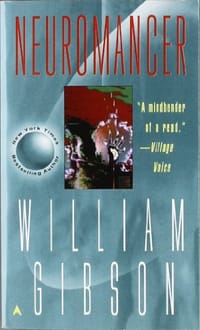
书籍介绍
这是一部让不少读者读得云里雾里、却又放不下书的书。它几乎凭一己之力为“赛博朋克”命名:那面由无数数据堆叠而成、如万家灯火般退却的“赛博空间”,那个外壁纯白、内里却藏着极度复杂智能的“白色方块”,至今仍是理解数字世界最贴切的隐喻。然而真正留住读者的,并非炫技式的设定堆砌,而是冷硬技术之下突然翻涌的肉身——一段让主角重新记起“属于牛仔们鄙弃的肉体”的情感,以及贯穿全书、如 noir 侦探小说般阴郁迷幻的语言。吉布森用近乎诗意的密度,把信息量压进每一句,读起来费力,却也正因如此,它成了《黑客帝国》《盗梦空间》《西部世界》反复回溯的源头。它适合愿意慢下来咀嚼文字、对“技术如何重塑人与身体关系”真正好奇的读者;若只求情节顺畅,或许会中途晕眩。
作者简介
William Gibson is the author of Neuromancer, Count Zero, Mona Lisa Overdrive, Burning Chrome, Virtual Light, Idoru, All Tomorrow's Parties, and Pattern Recognition.
Biography
Science fiction owes an enormous debt to William Gibson, the cyberpunk pioneer who revolutionized the genre with his startling stories of tough, alienated loners adrift in a world of sinister high technology.
Gibson was born in Conway, South Carolina, and spent much of his youth in Virginia with his widowed mother. He grew up shy and bookish, discovering science fiction and the literature of the beats at a precociously early age. When he was 15, he was sent away to private school in Arizona, but he left without graduating when his mother died suddenly. He fled to Canada to avoid the draft and immersed himself in '60s counterculture. He married, moved to British Columbia, and enrolled in college, graduating in 1977 with a degree in English. Around this time he began to write in earnest, combining his lifelong love of science fiction and his newfound passion for the punk music evolving in New York and London.
In the early 1980s, Gibson met writer and punk musician John Shirley and sci-fi authors Lewis Shiner and Bruce Sterling. All three were blown away by the power and originality of Gibson's stories, and together the four men went on to forge a radical new literary movement called cyberpunk. In 1984, Gibson's groundbreaking first novel, Neuromancer, was published. Daring and revolutionary, it envisioned such techno-marvels as AI, virtual reality, genetic engineering, and multinational capitalism years before they became realities. Although it was not an immediate sensation, Neuromancer struck a chord with hardcore sci-fi fans who turned it into a word-of-mouth hit. Then it won the Hugo, Nebula, and Philip K. Dick Awards (the Triple Crown of Science Fiction), catapulting Gibson into superstardom overnight.
Even if he had never written another word, Gibson's impact would be clearly seen in the works of such cutting-edge contemporary authors as Neal Stephenson, Pat Cadigan, and Paul DiFilippo. But, as it is, Neuromancer was just the beginning -- the first book in an inspired trilogy that has come to be considered a benchmark in the history of the genre; and since then, Gibson has gone on to create even more visionary science fiction, including The Difference Engine, a steampunk classic co-authored with Bruce Sterling, and such imaginative post-9/11 cyber thrillers as Pattern Recognition and Spook Country .
AI导读
核心看点
- 赛博朋克开山之作,定义虚拟空间概念
- 获雨果、星云、菲利普·迪克三大科幻奖
- 深刻影响黑客帝国等后世科幻影视创作
读者共识
- 文笔极具诗意,但信息量大导致阅读吃力
- 虽难懂但震撼人心,被公认为无法超越经典
- 不仅是小说,更是预测信息时代的趋势文本
精彩摘录
- "药力迅猛得如同高速列车,一股白热的光芒从前列腺周边攀上他的脊椎,短路的性快感照亮了他头骨间全部缝隙。每一颗牙齿都像一枚音叉,在他的牙槽里歌唱,音调精准无比,歌声清楚得犹如乙醇。在朦胧的血肉包裹之下,他的骨架被打磨得锃亮,关节也变得滑溜。沙暴从头颅底部席卷而过,一波一波的高强度静电在眼镜后面戛然而止,变作最纯净的晶体,不断生长……"
- "“试试这个。”凯斯说。 他接过头带戴上,凯斯帮他放好电极。他闭上眼睛,凯斯按下电源钮。爱洛尔战栗了一下。凯斯断开连接。“你看见了什么,老兄?” “巴比伦。”爱洛尔悲伤地说,然后将电极递给他,一脚蹬出,又向走廊下面去了"
- "“视觉效果什么样?” “白色方块。” “你怎么知道那是个人工智能?” “我怎么知道?老天爷,那是我见过最密的冰墙。还能是什么?就连巴西军队都没那种冰墙。反正我退出了网络,叫电脑去查。”"
- "他们沿着光网层层上升,一点蓝光在上面闪烁。 这就是了,凯斯想。 冬寂是一个简单的白色方块。极度简单的外形,昭示着极度复杂的内里。 凯斯在操控台上输入离方块只有四个格点的位置。空白外壁高高矗立在他面前,隐隐透出内里闪动的阴影,似乎有上千名舞者在这张巨大的磨砂玻璃背后飞旋。 “它知道我们来了。”平线说。 凯斯又敲了一下操作台;他们前进了一个格点。 方块表面上显现出一个灰色圆圈。 “南方人” “撤,赶紧。” 那片灰色区域鼓了起来,变成一个圆球,离开方块。"
- "“没有。”他说。一切都不再重要了,他所知的一切都失去了意义;他的舌头掠过她嘴边风干的眼泪,咸咸的。她的体内有一种力量,他在夜之城就曾发现的一种力量,一直在那里,也让他停在那里,一度远离时间,远离死亡,远离那无情的仁清街,那追索不休的街头生活。他曾经去过那个地方;那不是任何人都能引领他到达,他也总是让自己遗忘的地方。他曾经一再拥有,又一再失去。她拉着他俯下身,他知道了,他记起来了,那属于肉身,属于牛仔们鄙弃的肉体。它无比宏大,无以理解,它是螺旋与外激素编码而成的信息的海洋,它无限精妙,只有毫无思想的身体才能体会。"
- "赛博空间。每天都在共同感受这个幻觉空间的合法操作者遍及全球,包括正在学习数学概念的儿童……它是人类系统全部电脑数据抽象集合之后产生的图形表现。有着人类无法想象的复杂度。它是排列在无限思维空间中的光线,是密集丛生的数据。如同万家灯火,正在退却……"
- "电脑创意空间。世界上每天都有数十亿合法操作者和学习数学概念的孩子可以感受到的一种交感幻觉……从人体系统的每台电脑存储体中提取出来的数据的图像表示。复杂得难以想象。一条条光线在智能、数据簇和数据丛的非空间中延伸,像城市的灯光渐渐远去,变得模糊……"
- "只不过一个月,在他充斥着毒品与高压的生活里,她那双曾经惊惧的眼睛便已变作了本能欲望的深潭。他眼看着她的人格裂变,犹如冰川崩溃,碎冰随水而逝,终于袒露出最原始的瘾君子的饥渴。他看着她全神贯注地追求新的刺激,让他想起了志贺的小摊上,摆在蓝色变异鲤鱼和竹笼中的蟋蟀旁边的那些螳螂。 “记得吃药时就睡不好。”说这话的时候,一股清晰的渴望向他袭来,欲望与孤独全在安非他命的波长上奔袭。他想起她肌肤的味道,想起港口边那黑暗酷热的房间里,她的手指是如何扣住他的后腰。 都是肉体,他想,都是肉欲。 凯斯意识到,他的旅程就在这些星星照耀之下启航,而这些廉价铬合金组成的星座,也已预示了他的命运。 “搞清楚谁是朋友不太容"
用户评论
像钱德勒的书一样,看不太懂具体是怎么回事
My forever sweet sorrows.
太爽了!!看Neuromancer的过程就仿佛有人在我脑子里一朵接一朵地炸烟花hhh而且我真的很喜欢结局:迷茫者经历了跌宕起伏后找到了属于自己的路,当他不经意回首时,他发现自己虽然遗憾,但也从未后悔。
尤记得Jameson课上讲这本书和postmodernism,不过这次读的时候一直在想这是否可以算long 80s科技史的global counterpart…and What if the “punk” the Cyberpunk lies in his language.(以及,为什么书里明明一直在写日本千叶,Amazon上的德语版audiobook配的封面却是赛博朋克风的韩国城?)
放到今天也十分有趣的故事!
帮助AI获得解脱等于和恶魔做交易,和恶魔做交易需要知道恶魔的名字。联想到最近的万神殿动漫了。
有很多有趣的设定!
- 一开始不知道Flatline为啥叫Flatline,后来好像理解了,在接入时脑死亡、信号平了就是被flatlined,可以抢救制作成Flatline。
- Intrusion countermeasure electronics (ICE)是很有趣的缩写!good ice听起来像是南美毒贩会用的说法哈哈哈哈哈。放到今天叫electronics感觉依然合理,好像工业上安全相关的软件一般也是部署到独立的安全硬件上的。
- Cyberspace的描写最早是来自这里吗?不是很确定。
一部真正的二十一世纪小说,不是函数值(具体预测)而是导数值的意义上(隐喻、趋势、极值);最好的现代性文本,不只是文本还是互动项目,碎片、极速、超脱肉灵,我如果当了社会学教授,会强迫学生读这本:) 其它的时代,不会像我们这样理解雪花屏幕天空,电路图案,溺死在信息海,后来再没见过的手心利刃出鞘的女人。阅读过程非常费劲儿,在将来,那些我因为过度饮酒而呕吐晕眩的时刻,此书应该会常常回到我的身上。
这个语言的晦涩程度真的不一般,特别是对非母语者更是难上加难,真的难得读到让我这么发懵的小说。其实情节很简单。但这个世界观,哲学价值很提前于那个年代。越看越觉得gibson对未来的判断或许是准确的,只是时间范围暂不确定,但肯定不远了。
WG的世界游离在现实和虚拟之间,在光怪陆离的描述之间让你深陷故事的情节之中,很久没有这么酣畅淋漓的阅读体验了。我能在现阶段的很多影视、游戏作品中(Matrix Trilogy, Cyberpunk2077)看到这部1986年初版作品的影子,可谓是时代的先驱者了。Utterly Awestruck!
文笔好 但信息量太大 有声书读起来费力
下载
收藏