
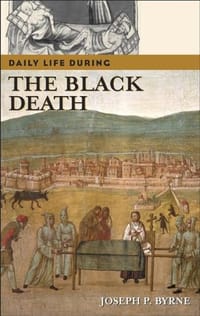
Daily life in the age of the Black Death was anything but normal. During the second pandemic of bubonic plague, from 1348 to 1722, Europeans were regularly assaulted by deadly epidemics. When plague hit a community, every aspect of life was turned upside down, from relations within families to the whole social, political and economic structure. Theatres emptied, graveyards filled, and the streets were filled by corpse-bearers' wagons. And yet the society that suffered the plague was able to produce the Renaissance, Reformation, Scientific Revolution, and early Enlightenment. "Daily Life During the Black Death" opens with an outline of the course of the pandemic, the causes and nature of bubonic plague, and the recent revisionist views of what the Black Death really was. The author presents the phenomenon of plague thematically by focusing on the places where people lived and worked: the home, the church and cemetery, the village, the pest houses, the streets and roads. The book then investigates contemporary theories of the causes of plague, doctors' futile attempts to treat victims, the authorities' vain attempts to prevent the pestilence, and its social impact. The narrative includes vivid examples from across Europe throughout the period, and presents the words of witnesses and victims themselves wherever possible.
约瑟夫•P.伯恩(Joseph P.Byrne)
田纳西州纳什维尔市(Nashville, TN)贝尔蒙特大学(Belmont University)荣誉副教授,其研究领域广泛,发表过包括罗马地下墓穴和美国城市化研究在内的一系列文章,但他的主要研究方向是黑死病时期的意大利。其作品包括《黑死病》(The Black Death, 2004)和《黑死病下的日常》(Daily Life during the Black Death, 2006)等。
 How to Write and Publish a Scientific Paper, 8th Edition
 How to Write and Publish a Scientific Paper, 8th Edition