
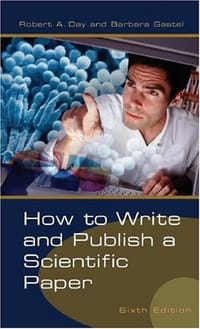
书籍介绍
这本书最打动人的,是它把'发表'视为科研不可分割的一部分,而非附属品:一项实验无论结果多漂亮,只要未被发表、未被他人理解,就尚未完成。作者借'森林里的声音无人听见便不算声音'这一比喻,点破无数论文石沉大海的尴尬——研究者耗费数年取得数据,却因轻视沟通而让价值流失。它适合那些愿意直面'做科研'与'写科研'双重责任的读者:研究生入门、资深学者温习皆可。其结构化的IMRAD(引言-方法-结果-讨论)框架是最大争议点,有人赞其言简意赅、是'科研写作圣经',也有人嫌过于机械、学不到新东西。若你追求清晰而非辞藻,这本书值得反复翻读。
AI导读
核心看点
- 详解IMRAD结构逻辑与写作步骤
- 强调科学写作的简洁与清晰原则
- 涵盖期刊选择、投稿及出版全流程
读者共识
- 被誉为科研写作入门必读经典
- 语言简练实用,具有极高指导价值
- 建议反复翻阅以规范写作习惯
精彩摘录
- "The logic of IMRAD can be defined in question from: what question was studied? The answer is the Introduction. How was the problem studied? The answer is the Methods. What were the findings? The answer is the Results. What do these findings mean? The answer is the Discussion."
- "The goal of scientific research is publication. A scientific experiment, no matter how spectacular the results, is not completed until the results are published. The scientist must not only "do" science but must "write" science. Certainly, many scientists do not like to write. As Charles Darwin said"
- "… must provide a written document showing what he or she did, why it was done(reason or significance of the research), how it was done(method), and what was learned from it(results and discussion)."
- "Like the Occam's razor, the spirit of scientific writing is also simpleness and clarity. State your facts as simply as possible, even boldly. No one wants flowers of eloquence or literary ornaments in a research article. — R. B. McKerrow Successful scientific experimentation is the result of a clear"
- "A scientific experiment is not complete until the results have been published and understood. Publication is no more than "pressure waves" unless the published paper is understood(声音没有被人听到就相当于没有,而文章没有被别人正确理解就相当于这篇文章没有写). Too many papers fall silently in the woods. A scientist will spend months or ye"
- "Especially because of the work of Louis Pasteur, who confirmed the germ theory of disease and who developed pure-culture methods of studying microorganisms, both science and the reporting of science made great advances. … Pasteur found it necessary to describe his experiments in exquisite detail. Be"
- "What question(problem) was studied? The answer is the Introduction. How was the problem studied? The answer is the Methods. What were the findings? The answer is the Results. What do these findings mean? The answer is the Discussion."
- "An acceptable primary scientific publication must be the first disclosure containing sufficient information to enable peers: 1. to assess observations 2. to repeat experiments 3. to evaluate intellectual processes moreover, it must be susceptible to sensory perception, essentially permanent, availab"
用户评论
推荐新手,很多极其有用的帮助。
第一本全英书,第一本认真做完笔记的课外书。我大学的时候竟然有这种觉悟。
Good instruction for how to write your work
言简意赅
后半本书选读了一些内容
科研写作圣经 隔段时间拿出来翻一翻 提醒自己
The key characteristic of scientific writing is clarity. The words of the signal should be as clear and simple and well ordered as possible. Scientific writing should be as clear and simple as possible.
The best English is that which gives the sense in the fewest short words.
摘自chapter 1
你可能会关注的书籍
 How to Write and Publish a Scientific Paper, 8th Edition
 How to Write and Publish a Scientific Paper, 8th Edition
求书
收藏