
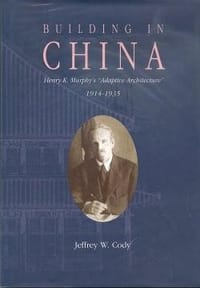
书籍介绍
翻开这本厚重的建筑史著作,你大概率会愣一下:封面朴素、内页几乎没有图,通篇是密密麻麻的文字。但正是这种“不讨好”,让它区别于市面上那些以图片取胜的建筑画册。作者以美国建筑师亨利·茂飞为核心,铺陈出1910年代那场激烈的行业竞争——茂飞与协和医学院建筑师赫西彼此看不顺眼、互相排挤,把建筑事务所的恩怨写得颇具戏剧性。真正耐人寻味的,是茂飞面对“中式古典复兴”与“西方现代技术”时的两难:他试图用传统外壳包裹现代功能,这些妥协之作后来竟被蒋介石、孙科等政治人物征用,无意间成了国家叙事的符号。它适合对“建筑如何被政治借用”“中西风格到底如何调和”这类问题较真的读者,也适合愿意啃文字、不满足于看图的深度读者。
作者简介
Jeffrey W. Cody is associate professor in the Department of Architecture at the Chinese University of Hong Kong, where he has taught architectural history since 1995.
AI导读
核心看点
- 聚焦亨利·墨菲,揭示中西建筑融合历程
- 探讨民国时期传统与技术的平衡之道
- 剖析建筑如何成为政治与文化的象征
读者共识
- 填补了墨菲在中国建筑史中的空白
- 史料详实,但部分章节叙事略显琐碎
- 启发思考传统形式在现代的转化应用
精彩摘录
- "The second issue Murphy sought to clarify during his Beijing visit was to what extent he faced stiff competition from Harry Hussey (Figure 14), the architect for Peking Union Medical College, then under construction in the capital. Hussey and Murphy intensely mistrusted one another. As Murphy toured"
- "“Hussey is our only important competitor; and he is making himself so unpopular by the mess he is getting into the Rockefeller work, and by his disgracefully unethical business methods, that we ought to be able to come out with flying colors after his attempts to ‘drive us out of China,’ as he put i"
- "Who is Hussey and where had he come from, complicating Murphy’s China-building plans? William Henry (Harry) Hussey was born in Port Dover, Ontario on 29 January 1880. The son of a local builder, Hussey was a picaresque figure who left Canada in 1897 to work in the United States and Mexico. Prior to "
- "Figure 14 Harry H. Hussy, one of Henry K. Murphy’s main competitors in China during the late 1910s."
- "Hussey was an ambitious architect with both a thirst for travel and perhaps a growing disdain with North American settings, so he enthusiastically agreed to join the YMCA’s overseas venture. His partner Shattuck remained in Chicago to work out the specific details for plans sketched by Hussey on the"
- "However, as much as Hussey enjoyed Japan, it was in China that he felt more comfortable. He settled in Beijing in 1911, just as the last Chinese emperor was being dethroned, and he began to make good friends, at first with those in the YMCA organization such as Fletcher Brockman and Thomas Gailey, a"
- "In 1913 Hussey was one of few American architects holding professional contacts in the Chinese capital (Murphy, of course, was another) and by virtue of his YMCA work he began to be called a “missionary architect,” finding increasing numbers of clients from North American missionary organizations wh"
- "From 1913 to 1916, in its search for a suitable PUMC architect, the Rockefeller Foundation became engaged in a three-step process. The first step involved their examining Henry Murphy’s designs for Yali, which Yale willingly provided. The second concerned their hiring Charles Coolidge, of the Boston"
用户评论
还以为是画册呢结果全是字……好哀愁。
中国近现代建筑是从什么时候开始的? 这本书是当今学术界少有的几本有助于解答这个问题的著作。 作者Jeffery Cody毕业于康奈尔大学建筑系,建筑历史与保护博士学位。 这本书是在Jeffery Cody的博士论文基础上发展起来的。 该书的研究对象是Henry Murphy, 一个在1915-1935年期间有大量重要作品,又在中国大陆建筑史教科书中很少提及的一位美国建筑师。他的工作室和设计作品影响了同时期的第一代中国建筑师:吕彦直,李锦沛,范文照,董大酉,赵深,童隽等。 该书的目的并不在于探讨什么是最好的现代中式建筑,而是为理解早期外国建筑师所尝试的“中国式风格”设计,提供更多的时代背景和信息。这非常有利于读者更全面地从历史的角度去看待和解读中国近现代建筑设计的发展。
读过Murphy在城市规划方面的一章节,关于南京”首都计划“以及再之前的广州城市规划的相关影响。Murphy与孙科及蒋介石等的朋友/合作关系等。
只读了一章……
我认为Cody在多处迷失重点 而在小处大下功夫 整本书记叙多分析少
super有趣
你可能会关注的书籍
求书
收藏