
书籍介绍
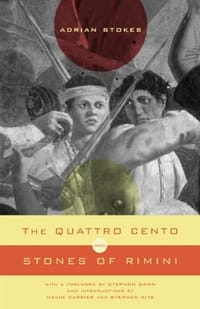
Adrian Stokes (1902-1972) was a British painter and author whose writings on art have been allowed to go out of print despite their impact on Modernism and ongoing acclaim for their beauty and intellectual acuity. Two of his most influential books, The Quattro Cento of 1932 and Stones of Rimini of 1934, are brought together for the first time in this new volume, which includes all their original illustrations. This new edition also provides a foreword by Stephen Bann and introductions by David Carrier and Stephen Kite that place Stokes's masterworks in the context of early twentieth-century culture and discuss their structure and relevance to today's experience of art and architecture.Written as parts of an incomplete trilogy, The Quattro Cento and Stones of Rimini mark a crossroads in the transition from late Victorian to Modernist conceptions of art, especially sculpture and architecture. Stokes continued, even extended, John Ruskin's and Walter Pater's belief that art is essential to the individual's proper psychological development but wove their teaching into a new aesthetic shaped by his analysis with Melanie Klein and recent innovations in literature, dance, and the visual arts.Few writers have been able to invoke the material presence of works of art in the way Stokes does in The Quattro Cento and Stones of Rimini. They combine travel writing with acts of looking spun out so as to reinterpret the imposing legacy of the Italian Renaissance through an aesthetic of the direct carving of stone, which has parallels in the sculpture of Henry Moore and Barbara Hepworth but was for Stokes the discovery of artists in fifteenth-century Italy. To his way of thinking, there then arosea realization that the materials of art "were the actual objects of inspiration, the stocks for the deepest fantasies." During the Renaissance, Stokes maintained, stone accordingly "blossomed" into sculpture and buildings, such as the Tempio Malatestiano, that throw "inner ferment outward into definite act and thought."
用户评论
感谢霍利的书让我认识了斯托克斯。《里米尼的石头》是一阙满溢着爱欲(amourous)的石之礼赞:“石头是坚固的,但又是柔和光线的栖息地,就像肉身的光辉一样,是激发一切视觉艺术的物质材料。……手工打磨的大理石所发出的光辉,只有肉身的光辉才能与之媲美。雕刻家向大理石求爱。”“在雕刻石头这种坚硬的发光质料时,它要领受全部的抚摸和打磨,领受我们的手和口为我们所爱之人所赋予的全部界定。”斯托克斯的写作,固然有其艺术史层面的野心:“物质材料对风格的影响是艺术史中一个从未被充分研究过的面向。”但对他来说,更重要的事情或许是借写作来实现忧郁症的自我疗愈:“写作中最容易的事,莫过于起死回生。”沉浸于石头的梦幻世界中的他,短暂地抛却了精神的痛苦。
重点读了Stones of Rimini,关于石材的物质性,以石块物质结构为基点的雕刻观念,自然生态和艺术创作之间的概念连续性,以及地理环境和艺术创作关系的想法,的确对当下学科关心的议题有用。对Agostino di Duccio具体作品的观察也很细腻到位。
求书
收藏