
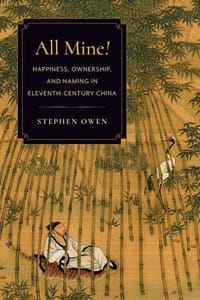
Under the Song Dynasty, China experienced rapid commercial growth and monetization of the economy. In the same period, the austere ethical turn that led to neo-Confucianism was becoming increasingly prevalent in the imperial bureaucracy and literati culture. Tracing the influences of these trends in Chinese intellectual history, All Mine! explores the varied ways in which eleventh-century writers worked through the conflicting values of this new world.
Stephen Owen contends that in the new money economy of the Song, writers became preoccupied with the question of whether material things can bring happiness. Key thinkers returned to this problem, weighing the conflicting influences of worldly possessions and material comfort against Confucian ideology, which locates true contentment in the Way and disdains attachment to things. In a series of essays, Owen examines the works of writers such as the prose master Ouyang Xiu, who asked whether tranquility could be found in the backwater to which he had been exiled; the poet and essayist Su Dongpo, who was put on trial for slandering the emperor; and the historian Sima Guang, whose private garden elicited reflections on private ownership. Through strikingly original readings of major eleventh-century figures, All Mine! inquires not only into the material conditions of happiness but also the broader conditions of knowledge.
Stephen Owen is James Bryant Conant University Professor Emeritus in the Department of East Asian Languages and Civilizations at Harvard University. His many books include, most recently, Just a Song: Chinese Lyrics from the Eleventh and Early Twelfth Centuries (2019).
显示全部
 Amboina, 1623
 The Unworthy Scholar from Pingjiang
 How Did Lubitsch Do It?
 Contemporary Chinese Short-Short Stories
 The Naqab Bedouins
 Crude Volatility