
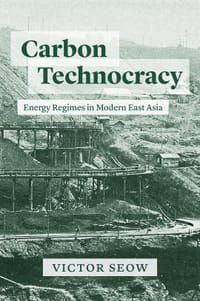
A penetrating look at the deep links between energy extraction and technocratic governance through the history of what was once East Asia’s biggest coal mine.
The coal-mining town of Fushun in China’s Northeast is home to a monstrous open pit, once the largest in Asia. Across the twentieth century, this pit grew like a widening maw, as various Chinese and Japanese states endeavored to unearth Fushun’s purportedly “inexhaustible” carbon resources. Today, the depleted pit remains a wondrous and terrifying monument to fantasies of a fossil-fueled future and to the technologies mobilized in attempts to turn those developmentalist dreams into reality.
In Carbon Technocracy, Victor Seow uses the remarkable story of the Fushun colliery to chart how the fossil fuel economy emerged in tandem with the rise of the modern technocratic state. Taking coal as an essential feedstock of national wealth and power, Chinese and Japanese bureaucrats, engineers, and industrialists pursued intensive energy extraction and deployed new technologies like open-pit mining and hydraulic stowage to maximize their hauls. At the same time, as much as these mine operators idealized the might of the machine and the fossil fuels that drove it, their extractive efforts nevertheless relied heavily on human labor. Under the carbon energy regime, countless workers here and elsewhere would be subjected to both the productivist demands of states and markets and the dangers of an increasingly exploited earth.
Although Fushun is no longer the coal capital it once was, the pattern of aggressive fossil-fueled development that enabled its ascent endures. As we confront a planetary crisis precipitated by the profligate consumption of carbon, it holds urgent lessons. This is a groundbreaking exploration of how the mutual production of energy and power came to define industrial modernity and the wider world that carbon made.
Victor Seow is assistant professor of the history of science at Harvard University. A historian of technology, science, and industry, he specializes in China and Japan and in histories of energy and work.
显示全部
 The Fruits of Opportunism
 Wordcraft
 Authoritarian Apprehensions
 Materials of the Mind
 On Descartes' Passive Thought
 Palmyra