
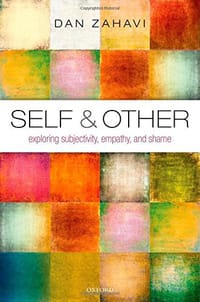
书籍介绍
这本书最见功力的地方,在于扎哈维坚持把「第一人称的主体性」当作思考自我与他人关系的起点,而非像社会建构论那样把自我还原为关系的产物。读者反复提及的「同感(empathy)」正是要回答:我们究竟如何能在体验层面直接触及他人,而非通过推理或投射去「猜」另一个心灵。全书由此分为体验的自我、同感理解、人际的自我三条线索,并以「羞耻」这一看似日常的章节收束,指向自我如何在他人目光中成形。多位读者指出其论证清晰好读,但也有人批评其理论模型偏简单、与作者另一部著作高度重复。它适合对现象学、心灵哲学及自我认同问题有基础、愿意跟随第一人称视角一路追问的读者;若期待一本观点锋利、层层推进的专著,或许会感到部分章节浅尝辄止。
作者简介
Dan Zahavi is Professor of Philosophy and Director of Center for Subjectivity Research at the University of Copenhagen. He was elected member of Institut International de Philosophie in 2001 and of the Royal Danish Academy of Sciences and Letters in 2007. From 2001 to 2007 he served as president of the Nordic Society for Phenomenology, and he is currently co-editor in chief of Phenomenology and the Cognitive Sciences. In his systematic work, Zahavi has mainly been investigating the nature of selfhood, self-consciousness, and intersubjectivity. His most important publications include Husserl und die transzendentale Intersubjektivität (Kluwer, 1996), Self-awareness and Alterity (Northwestern University Press, 1999), Husserl's Phenomenology (Stanford University Press, 2003), Subjectivity and Selfhood (MIT Press, 2005), and, with Shaun Ghallagher, The Phenomenological Mind (Routledge, 2008).
目录
Acknowledgements
Introduction
Part I: The Experiential Self
1: Conflicting perspectives on self
2: Consciousness, self-consciousness, and selfhood
显示全部
用户评论
As good as usual.
扎哈维真的太棒了👏
二刷
想起来补标一下。当初还试着搭台,让皮考克,扎哈维和德莱斯基一起唱过戏。
不太喜欢这本,相比于Dan Zahavi的另一书:subjectivity第一人称视角探索,这本书在该详述的地方浅浅带过,没有明确的重点。又在其他太多地方和那本书重复。所以读这本书挺煎熬的,从中学不到太多东西。最后关于shame的章节没读完,有缘再看。(关于人为什么感到羞耻:是自身imperfection的展示、是被客体化、还是被群体规则所审判。)
清楚简洁好读,不过好读的原因可能是其理论模型比较简单。他这个irreducible selfhood更近胡塞尔-萨特,但是这种selfhood由于仅仅只是个别的意识内容的自我关联特征,从而无法刻画主体性结构中意识之流,即,内时间维度
Oxford University Press的其他书籍查看全部
 The Oxford Handbook of Experimental Syntax (Oxford Handbooks)
 The Fasces
 The Primacy of Doubt
 Landscape and Space
 Future Morality
 Figurines
求书
收藏