
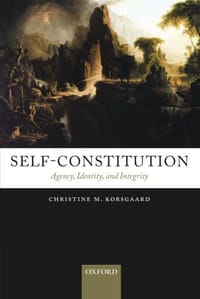
书籍介绍
这本书最锋利之处,在于它把'一个人疯没疯'当成一个哲学问题来追问。柯思嘉借僭主的例子提出:当一个人反复选择某种冲动、却永远无法把自己与这些冲动区分开来时,他便不再是自由地行动,而是沦为一堆碎片、一种自然的力量。这一判断极具争议,也极打动人心——它暗示,道德失败或许不只是'选错了',而可能是'不再是一个完整的主体'。全书由此展开对自我构成、实践理性与义务根基的论证,第五章对主体性之可能性的论述尤其被读者盛赞。它适合那些不满足于'该做什么'、而想追问'凭什么我能成为一个能行动的人'的读者;也适合对康德、内格尔、威廉斯、Parfit之争有浓厚兴趣的人。
作者简介
Christine M. Korsgaard is an American philosopher whose main academic interests are in moral philosophy and its history; the relation of issues in moral philosophy to issues in metaphysics, the philosophy of mind, and the theory of personal identity; the theory of personal relationships; and in normativity in general. She has taught at Yale, the University of California at Santa Barbara, and the University of Chicago; since 1991 she has been a professor at Harvard University.
Korsgaard received a B.A. from the University of Illinois and a Ph.D from Harvard where she was a student of John Rawls.
AI导读
核心看点
- 本书核心探讨实践理性与道德义务的基础,提出行动的功能在于构成行动者自身。作者认为,正如心脏的功能是泵血,行动的功能是构成主体,因此评价行动好坏需基于其是否成功构成一个统一、理性的自我,而非外在标准。
- 作者融合柏拉图、亚里士多德与康德思想,论证自我必须保持统一性才能进行理性行动。内部的不正义或分裂会导致慎思能力瓦解,因此道德规范并非外在强加,而是源于人类作为理性存在者维持自我完整性和精神统一性的内在需求。
- 书中详细辨析了规范性来源,反对道德实在论,主张规范性源于人类的自我构成方案。作者强调,理性行动并非追求外在良善目标,而是为了维护行动者作为统一整体的身份,任何违背理性的行为都是对自我构成的破坏,即缺陷行动。
读者共识
- 读者普遍认为本书写作技巧高超,论证看似有力且极具说服力,但核心论证存在严重缺陷。许多评论指出作者通过语言策略和牵强附会的逻辑来支撑其结论,虽然表面自圆其说,但实质上并未真正解决规范性来源问题,甚至被批评为“伪论证”。
- 尽管核心论证备受争议,但读者高度认可书中部分章节的思想价值,特别是第五章关于主体性、自我统一性及康德两种命令式关系的讨论。这些内容被认为具有启发性,能为理解自我困惑、反抗压迫提供哲学资源,并激发读者重读康德的热情。
- 读者反馈该书阅读体验痛苦,逻辑晦涩且充满误导。有评论指出作者未能区分关键概念,且论证过程缺乏严谨性,导致读者感到“隔靴搔痒”。总体而言,本书被视为一部写作精美但哲学根基不稳的作品,不适合初学者,仅建议作为批判性研究的反面教材或特定议题参考。
精彩摘录
- "我是怎么知道这些的呢?我的意思是,我能逻辑地证明僭主不是在选择行动吗?我能证明他并不是每次分别决定,为了这个目的做这个行为是一件因其本身值得做的事情,而结果目的总是一样的吗?也许我无法证明这在逻辑上是不可能的。尽管如果僭主的状况取决于他的精神病——比如说,假如他不得不把所有女人都看成妓女,或者把所有犹太人都看成反叛者,或者一些类似的情况一但是这看起来像是很好的证据,表明他疯了,而不仅仅是在选择不同于我们其他人选择的东西。还记得那个决定不惜一切代价去追求主观满足的所谓的理性利己主义者吗?(8.3.3)这就像决定要成为一个僭主一样,而结果他终究是疯了。 但是一个精神病患者的世界观可能或多或少是完整"
- "内格尔认为,利他主义之所以成为可能,是由于对理由的形式要求:这些理由应该以客观的或主体无涉的方式可公式化……"
- "在这里以及其他地方,威廉斯倾向于认为,似乎那些将“应该”与“道德上应当”等同起来的人,是在试图表明我们总是应该通过一种语言策略或计谋来做道德上正确的事情。"
- "但是,如果一个原则是暂时普遍性的,在遇到一种例外情况时,我们必须立刻回头修正这个例外,使其跟暂时普遍性本质上所追求的绝对普遍性更接近一些。"
- "给自己一个惊喜给自己一个惊喜,即使他们对你严刑拷问,你也确实坚持住了并且保守了秘密,那么这是否意味着你没有遵守你的有条件的承诺呢?"
目录
Preface ;
1. Agency and Identity ;
2. The Metaphysics of Normativity ;
3. Formal and Substantive Principles of Reason ;
4. Practical Reason and the Unity of the Will ;
显示全部
用户评论
A Great contemporary philosopher! Though several places are elusive and dark. E.g., a big issue parallel to and indeed inherited from Plato: in what account inward justice and outward justice share the same notion of justice, just as in what account justice in the city and justice in the soul participate in the same Form of justice.
为我所有的期望和惧怕以及挫败感找到了合适的语言。
非常有意思 清晰有力中又不失诙谐 act和action的区分令人茅塞顿开 formal和substantive law的区分也很有用 近期更能摸到自己感兴趣的问题的形状了: “我”是统一的还是可分的? 如何解决akrasia? 什么才是能动性? (读完以后燃起了再读康德的热情
第五章最有意思。
虽然最关键的论证不成功,但整体写得还是很好的
“引人深思”具像化案例
Rich and nicely written. 有不少地方值得展开论述,其中一些K在相应的论文里已经尝试做了。
Oxford University Press的其他书籍查看全部
 The Oxford Handbook of Experimental Syntax (Oxford Handbooks)
 The Fasces
 The Primacy of Doubt
 Landscape and Space
 Future Morality
 Figurines
求书
收藏