
书籍介绍
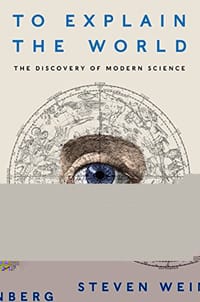
A masterful commentary on the history of science from the Greeks to modern times, by Nobel Prize-winning physicist Steven Weinberg—a thought-provoking and important book by one of the most distinguished scientists and intellectuals of our time.
In this rich, irreverent, and compelling history, Nobel Prize-winning physicist Steven Weinberg takes us across centuries from ancient Miletus to medieval Baghdad and Oxford, from Plato’s Academy and the Museum of Alexandria to the cathedral school of Chartres and the Royal Society of London. He shows that the scientists of ancient and medieval times not only did not understand what we understand about the world—they did not understand what there is to understand, or how to understand it. Yet over the centuries, through the struggle to solve such mysteries as the curious backward movement of the planets and the rise and fall of the tides, the modern discipline of science eventually emerged. Along the way, Weinberg examines historic clashes and collaborations between science and the competing spheres of religion, technology, poetry, mathematics, and philosophy.
An illuminating exploration of the way we consider and analyze the world around us, To Explain the World is a sweeping, ambitious account of how difficult it was to discover the goals and methods of modern science, and the impact of this discovery on human knowledge and development.
作者简介
Steven Weinberg is a theoretical physicist and the winner of the Nobel Prize in Physics, the National Medal of Science, the Lewis Thomas Prize for the Scientist as Poet, and numerous honorary degrees and other awards. He is a member of the National Academy of Science, the Royal Society of London, the American Philosophical Society, and other academies. A longtime contributor to The New York Review of Books, he is the author of The First Three Minutes, Dreams of a Final Theory, Facing Up, and Lake Views, as well as leading treatises on theoretical physics. He holds the Josey Regental Chair in Science at the University of Texas at Austin.
AI导读
核心看点
- 诺奖得主温伯格梳理从古希腊到现代的科学史脉络。
- 论证实验与数学取代哲学思辨,推动科学真正进步。
- 揭示古代学者不仅不懂世界,更不懂如何理解世界。
读者共识
- 观点犀利且具颠覆性,但部分读者认为内容枯燥。
- 翻译质量参差不齐,建议有条件者阅读英文原版。
- 虽被指有辉格史观嫌疑,但逻辑严密,极具启发性。
精彩摘录
- "“······在科学(哲学部分需另请高明)中,最重要的不是当时的热门科学问题的解法,而是对世界的理解。”"
- "细想之下,反射现象颇为蹊跷。当你观察平面镜中一个小物体的影像时,你所看到的影像处在一个确定的位置,而非散布在整个镜面。然而,从物体经过镜面各处到达人眼可以有多条路径。显然,实际发生的只有一条路径,因而图像出现在该路径交于镜面的那一点。但是什么决定了该点在镜面上的位置呢?《反射光学》中的一条基本原理回答了这个问题:光线在镜面发生反射时,反射角等于入射角——只有一条光路能够满足这个条件。"
- "与引力一样,电流与磁铁之间相互作用力的概念也被场的概念所替换,此处称为磁场。磁铁和载流导线对其周围任意点的总磁场做出贡献,而磁场反过来对该点上的任何磁铁或电流施加作用力。迈克尔•法拉第(Micheal Farady)用围绕导线的磁力线来描述电流产生的磁力。他还把琥珀摩擦产生的电力归因于电场作用,并将电场分布描绘为以琥珀上的电荷为中心向外辐射的电力线。更重要的是,法拉第在19世纪30年代证明了电场和磁场之间的联系:变化的磁场,例如旋转线圈中电流所产生的磁场变动,会产生电场,它可以在另一导线中产生电流。这种现象正是现代发电厂的发电原理。"
- "······公元前3000年,埃及人已经知道,每当天狼星偕日同升(天狼星在这一天的破晓前首次出现在地平线附近,在此之前无法在夜间观测到,在此之后则逐渐从黎明提前到夜间出现),便意味着农业中的重要事件--始于6月的尼罗河汛期--开始了。公元前6世纪以前,荷马在其作品中,将阿喀琉斯比作夏末高悬空中的天狼星:“那颗星,在秋天显露/布满繁星的夜空,它的光芒格外夺目/“俄里翁的猎犬”,是人们对它的称呼/闪耀的群星中,这一颗最为耀眼/人们却视为凶险,憎恶它的出现/只因它将滚滚热浪,带向苦难人间。”"
- "······贾比尔研究了蒸发、升华、融化和结晶等技术。他专注于将普通金属转化成黄金,因此通常被称为炼金术士。但在那个年代,化学和炼金术之间只存在人为的区分,因为当时尚无任何基本科学理论告诉人们这样的转化是异想天开。"
- "哥白尼的这一工作体现了物理科学史上另一个反复出现的话题:一个简洁美观并与观测结果吻合得不错的理论,往往比复杂丑陋却更符合观测结果的理论更接近真理。"
- "对著有道德或政治哲学乃至形而上学方面著作的人来说,科学上的判断失误并不影响对其著作的评价;但由于笛卡儿的著作是关于“正确思维和发现科学真理的方法”的,他一再犯错的事实必然将给他的哲学判断蒙上一层阴影。推导本身根本无法担负笛卡儿赋予的重任。"
Harper的其他书籍查看全部





下载
收藏